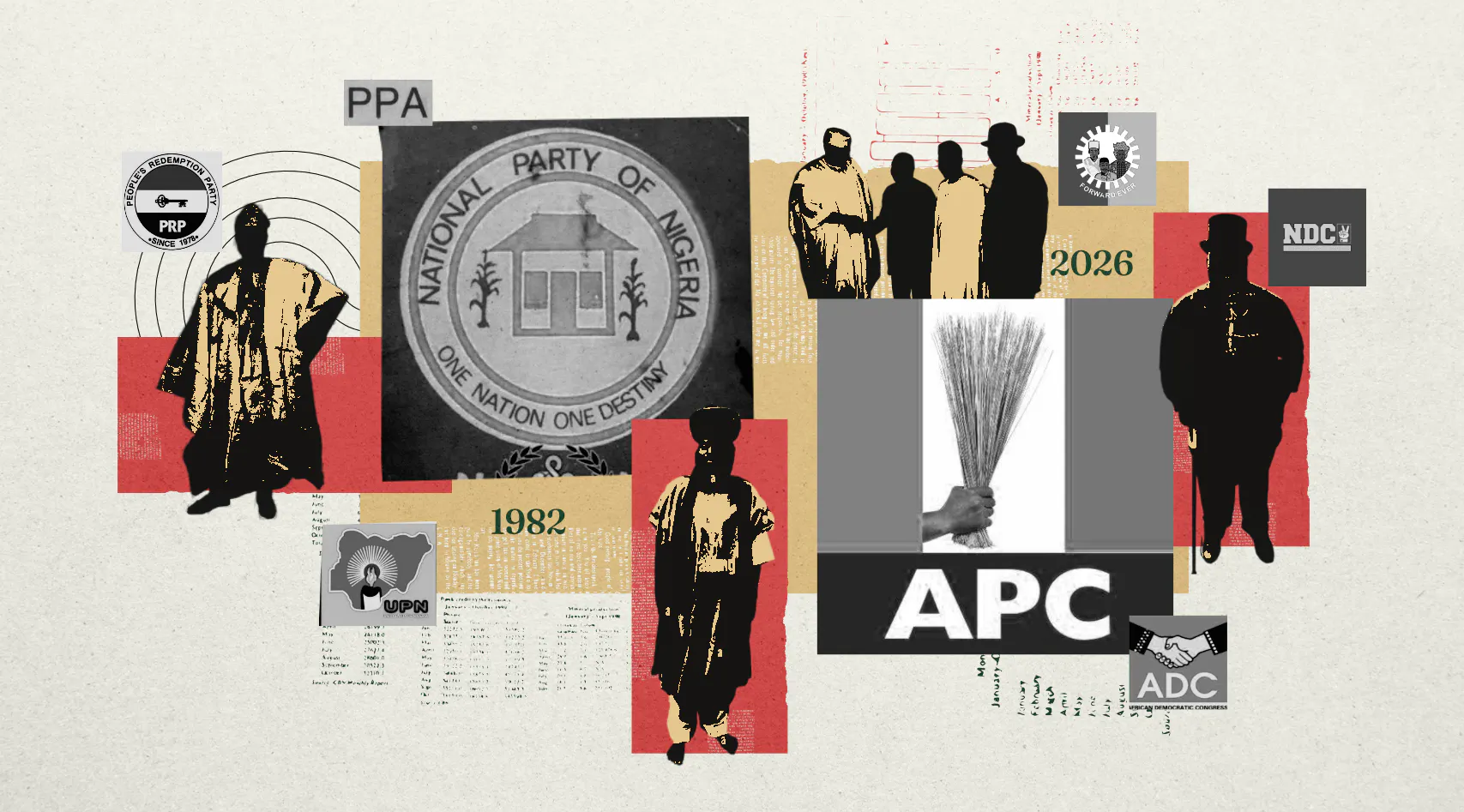
It’s Not the Parties, It’s the Men
In theory, defeating a powerful ruling party is just simple maths. If different opposition parties are splitting votes and each has strong support in different parts of the country, combining them into one “mega-party” should be enough to tip the election in their favour.
But in practice, Nigerian politics sometimes defies basic maths.
That is because political parties in Nigeria are often built around personalities. So, the hard part, beyond merging, is also persuading powerful politicians to back someone else for president.
Ahead of the 1964 general elections, Nigeria’s first major opposition coalition, the United Progressive Grand Alliance (UPGA), was formed when the Action Group (AG) and the National Council of Nigerian Citizens (NCNC) tried to gang up against the ruling Northern People’s Congress (NPC). But deeply entrenched personal rivalries and regional suspicions fractured the coalition, leading to widespread election boycotts and political crisis.
The 1981 panic
By the early 1980s, the same panic returned. The realisation that opposition leaders needed to pool their resources was born out of survival during the 1981 local government allocation disputes. That year, the federal government, led by the National Party of Nigeria (NPN), passed a new revenue allocation law that handed the centre the biggest cut of national funds, a law so unpopular the Supreme Court later struck it down. Under the Second Republic (1979-1983), the NPN-controlled federal government leveraged incumbency and control over federal institutions in its political battles with opposition-controlled states.
That panic was evident in Kaduna in June 1981. Balarabe Musa, a Peoples Redemption Party (PRP) governor, became the first governor impeached in Nigerian history after running afoul of a state legislature dominated by the NPN, which voted down all his cabinet nominees. The opposition realised the ruling party, more than trying to win elections, was also in the business of weakening rivals.
In response, by March 1982, the leaders of the four opposition parties — the Unity Party of Nigeria (UPN), the Nigerian People’s Party (NPP), the Great Nigeria Peoples Party (GNPP), and a faction of the PRP — formed the Progressive Parties Alliance (PPA), an electoral alliance intended to unite the opposition against the ruling NPN ahead of the 1983 elections.
Why the alliance fell apart
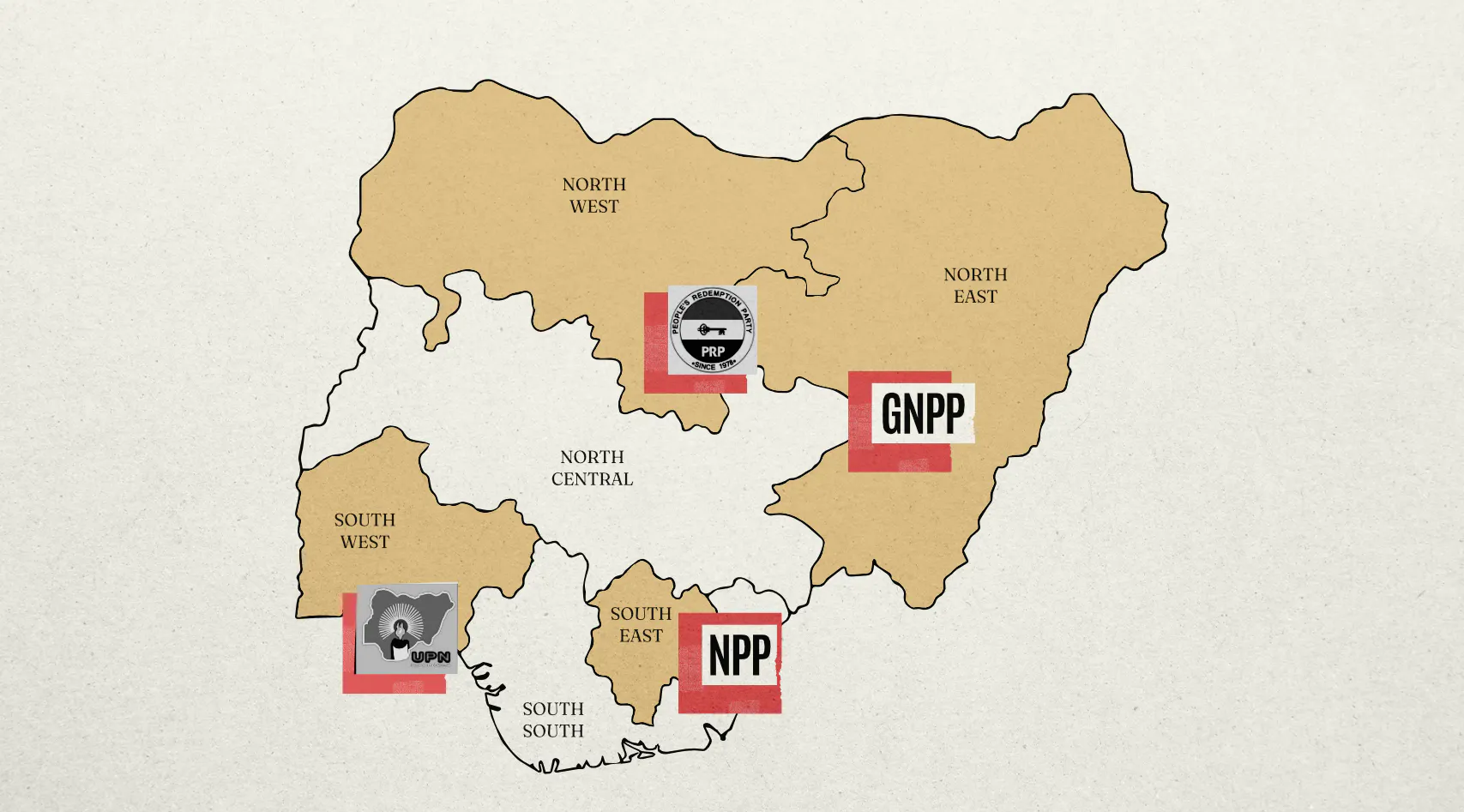
The alliance relied on the regional strongholds of its member parties: the UPN in the South West, the NPP in the South East, and the PRP and GNPP in parts of Northern Nigeria. PPA leaders hoped to coordinate their electoral efforts against the ruling NPN and explored arrangements for sharing electoral offices, including the possibility of a single presidential candidate.
The alliance was largely led by Awolowo and Azikiwe, leaders whose influence and popularity reflected a bitter rivalry during the First Republic (1960-66). Notably, Azikiwe’s NCNC struck a deal with the NPC in 1959 to form a national government and relegate Awolowo’s AG to the role of opposition.
Their brief reconciliation after the 1979 election, when they jointly challenged Shagari’s victory at the Supreme Court, ended after Azikiwe’s NPP struck its own accord with the NPN soon after. This gave Shagari a working majority in the National Assembly. In exchange for propping up the government, the NPP secured cabinet appointments. However, the NPP soon distanced itself from the Shagari government and began preparing for 1983. An alliance would, once again, prove to be its best chance to unseat the incumbent.
To avoid a later fight over power, the PPA alliance negotiated in advance how key federal offices would be shared among the member parties. A Committee of Eight divided cabinet positions, legislative offices, diplomatic postings and major parastatals into four baskets. But the exercise only postponed the central question: who would get the presidency?
By 1982, one of Azikiwe’s aides described the two men’s relationship as one of mutual distrust dressed up in public as displays of friendship. Awolowo was open about wanting the presidency for himself; Azikiwe’s lieutenants were just as unwilling to let their man take a backseat.
When the Federal Electoral Commission (FEDECO) refused to register the PPA’s Progressive Peoples Party (PPP) as a unified platform, the alliance had no fallback plan. Because neither Awolowo nor Azikiwe would yield, both men ran separate campaigns in 1983. They split the anti-incumbent vote, allowing Shagari to cruise to a 47.5% victory, with Awolowo taking 31.1% and Azikiwe 14.0%.
The PPA was undone by the same problem that had haunted Nigeria’s opposition for decades: its leaders' inability to unite behind a common cause.
The pattern repeats
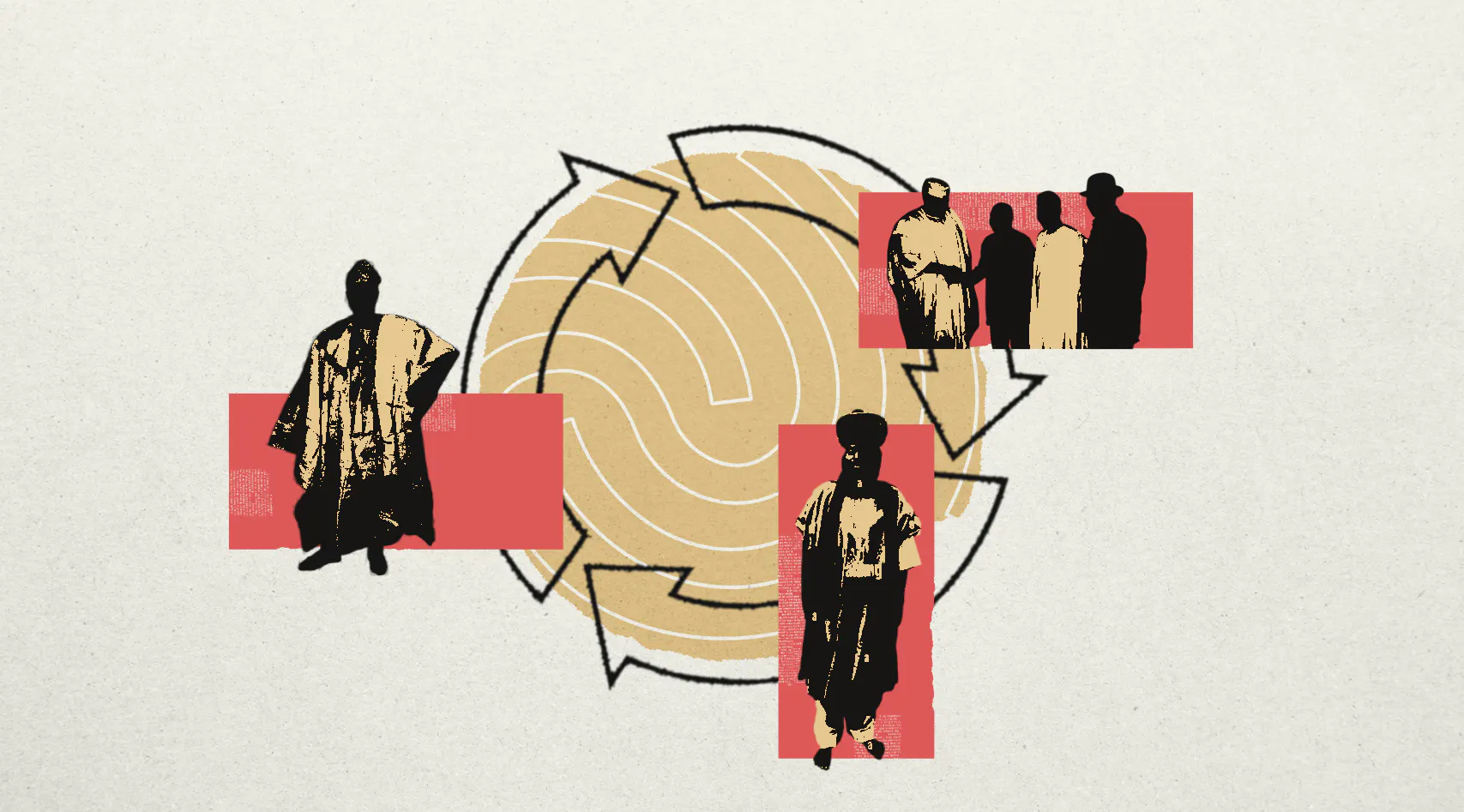
Since the collapse of the PPA alliance in 1983, nearly every attempt to unite Nigeria’s opposition has run into the same obstacle.
In 1999, as Nigeria prepared to return to civilian rule, the Alliance for Democracy (AD) and the All People’s Party (APP) accepted that neither could defeat the People’s Democratic Party (PDP) alone. They agreed to merge their tickets: AD providing the presidential nominee, Olu Falae, and APP presenting the running mate, Umaru Shinkafi. The alliance lost the election but showed that opposition parties could rally behind one candidate when they accepted political compromise.
That spirit would prove to be difficult to sustain. Ahead of the 2011 election, negotiations between Muhammadu Buhari’s Congress for Progressive Change (CPC) and Bola Tinubu’s Action Congress of Nigeria (ACN) promised to create a formidable opposition bloc. But the talks broke down amid disagreements over who would take the vice-presidential slot, power-sharing arrangements and how the alliance itself would be structured. Both parties eventually contested separately, allowing the PDP to retain power comfortably.
The breakthrough came in 2015, but only because the opposition moved beyond an electoral alliance. The ACN, CPC, All Nigeria Peoples Party (ANPP) and a faction of the All Progressives Grand Alliance (APGA), together with a renegade faction of the ruling PDP, dissolved their individual platforms to form the All Progressives Congress (APC).
Muhammadu Buhari emerged as the consensus candidate, while figures such as Bola Tinubu, Atiku Abubakar and Bukola Saraki accepted a process that required political concessions. It remains the only opposition coalition in Nigeria’s democratic history to defeat an incumbent ruling party.
By 2019, old patterns had returned. The Coalition of United Political Parties (CUPP) brought together dozens of opposition parties to challenge the APC. Without a common structure or a binding process for choosing one candidate, the coalition struggled to maintain the kind of unity that had made the APC successful four years earlier.
Following the 2023 presidential election, opposition leaders reached the same diagnosis their predecessors did in 1982: a broken field cannot unseat an incumbent. By July 2025, Atiku Abubakar, Peter Obi, Nasir El-Rufai, Rotimi Amaechi and other political figures took over the African Democratic Congress (ADC) as a ready-made coalition vehicle, rather than building an entirely new party as their predecessors tried to in 1982.
Yet, the prescription failed for the same reason it failed 43 years before. Neither Atiku’s camp nor Obi’s movement was willing to take the secondary position on a joint ticket. By May 2026, the coalition shattered. Obi and Rabiu Kwankwaso began consolidating inside a separate platform, the Nigeria Democratic Congress (NDC), while Atiku’s bloc remained inside the ADC.
One can see how the collapse mirrors 1983. In Nigerian politics, opposition figures routinely agree on the goal: removing the ruling party. What they usually fail to do is accept the personal sacrifice required to achieve it.
As long as political parties remain extensions of individual ambitions, the math of opposition unity will continue to collapse at the feet of the men who refuse to defer.
Credits
Editor: Afolabi Adekaiyaoja
Illustrations: Adeoluwa Henshaw