What Osun 2026 Tells Us About Nigeria’s Politics Today
Nigerian elections are very personality-driven. Osun might be the latest example.
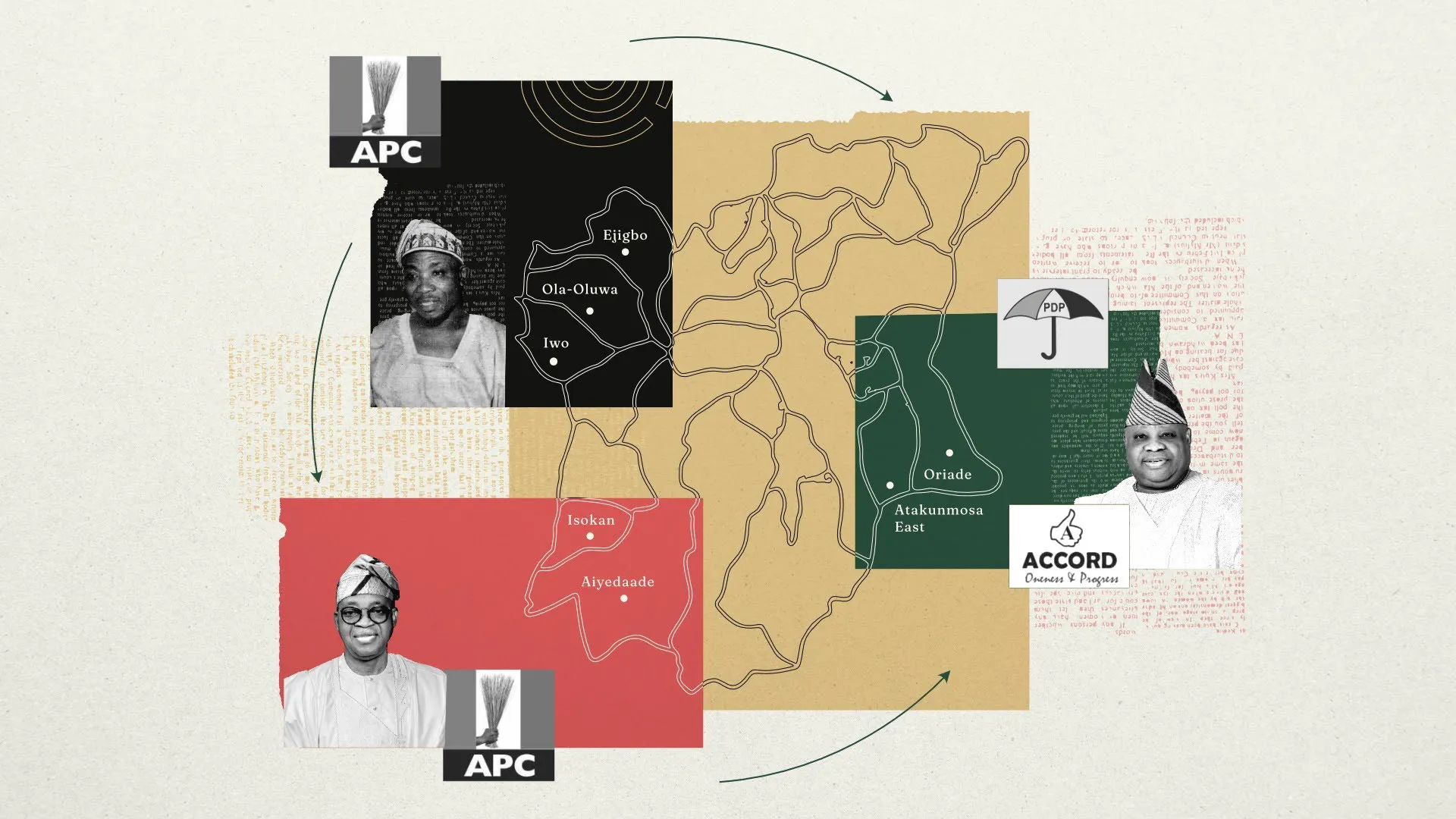
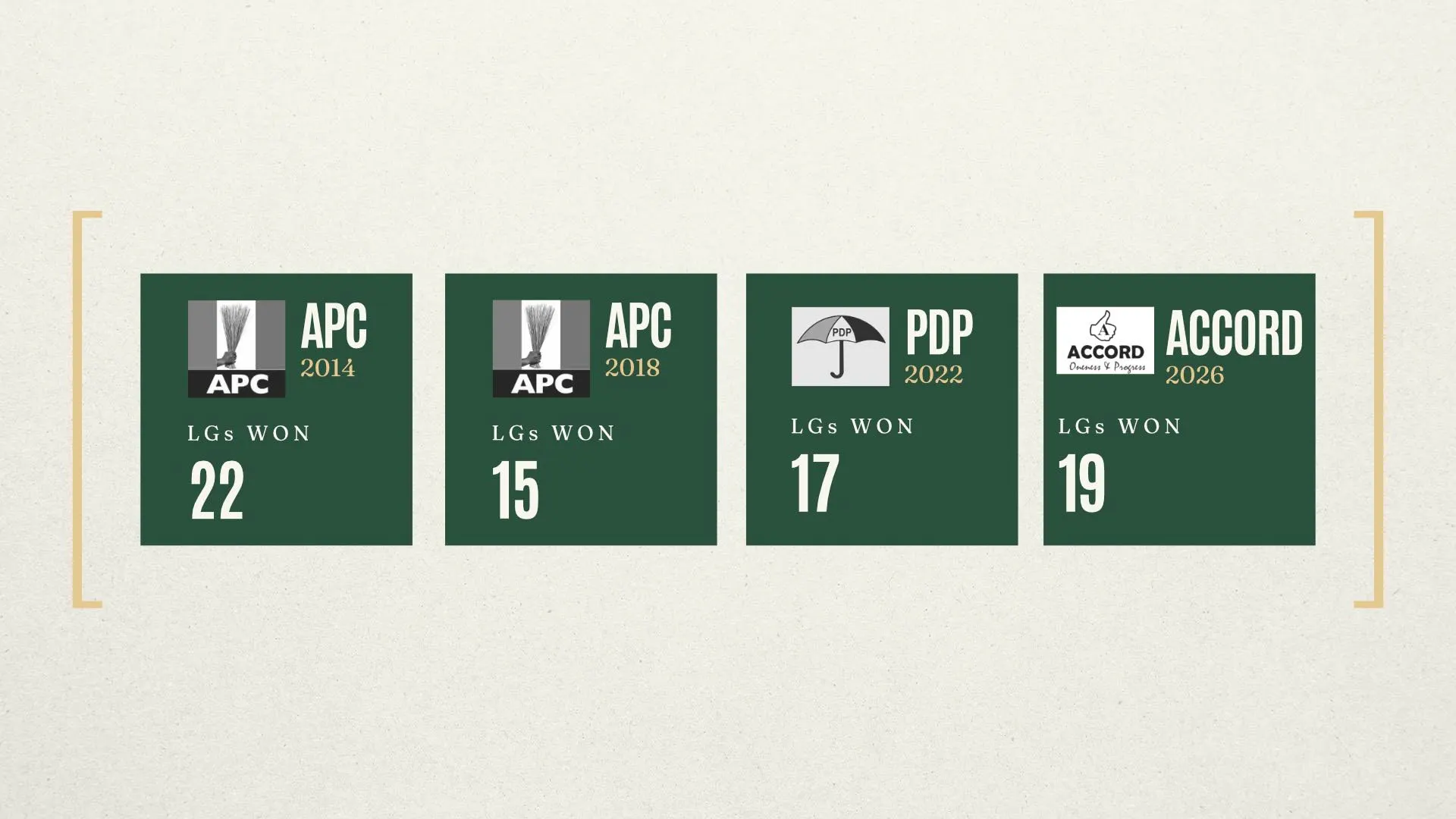
Before, we might have considered states as strongholds of particular parties. In Osun’s case, the peak came in 2014: APC’s Rauf Aregbesola won the gubernatorial election, capturing 22 of the state’s 30 local government areas. It looked almost unbeatable.
But by 2026, the story appears to have changed. Adeleke’s victory, as an Accord Party candidate, gives Osun its third governing party in as many elections. The PDP, ‘winner’ of the last election, could not even field a candidate in this election. APC, with a retinue of over 30 governors, had a strong candidate but was unable to stop the combination of incumbency and Adeleke’s own appeal.
Adeleke’s victory, which saw him take the most LGAs in his three gubernatorial races, goes against general convention. But in 2027, many first-term governors will seek re-election on platforms other than the ones they won their first terms on. Osun’s political map, and its unpredictability, might show us how voters treat parties and politicians in modern-day Nigerian politics.
The unravelling of a monolith
Elections have always relied on a coalition of influential politicians leveraging their resources together. In 2014, APC’s Aregbesola’s strength in his native Osun East and allies in other senatorial zones resulted in his victory, while PDP’s Omisore’s strength in Ife showed in the LGAs he was able to win. In 2018, Omisore took these LGAs to the Social Democratic Party (SDP) as their nominee, while Moshood Adeoti, a former government appointee, kept his native Iwo. Their candidacies reduced the share for the major parties: PDP, fielding Adeleke, and APC, with eventual winner Oyetola.
By 2022, PDP’s Adeleke won 17 LGAs against Gboyega Oyetola’s 13, including Osogbo, effectively reversing the balance of power in the state capital. His influence in Osun West was evident, and some reports even argued that Aregbesola’s reluctance to campaign in Osun East contributed to the APC’s defeat. This made Oyetola a one-term governor, but the APC’s strategy has largely depended on maintaining a firm grip on the South West, meaning that regaining Osun has always been a priority.
Ahead of 2027, several APC chieftains asserted that Osun needed to be won at all costs. Coupled with PDP’s internal crisis, Adeleke made the decision to defect to the little-known Accord Party. With Oyetola supporting APC’s Oyebamiji, Aregbesola leading the ADC’s campaign, PDP failing to produce a flagbearer, and the incumbent governor leading a largely unknown party, the election was less about party strength and more about the support these politicians had. More than any previous election in Osun history, it was a direct referendum on an individual leader’s popularity.
Adeleke’s serious gamble, abandoning an established party for a smaller platform, would pay off because he was able to leverage incumbency and personal appeal with the voters. Ahead of the elections, he was able to move with other state lawmakers, including the speaker, to Accord.
The LGA subplot
The 19 – 11 scoreline makes 2026 look straightforward. It was not. Of the 10 LGAs that flipped, Adeleke gained six, while Oyebamiji took four.
Several plot points dominated the race. For starters, both Adeleke (Ede South) and Oyebamiji (Irewole) were from Osun West, which followed the convention that the senatorial zone would hold the governorship. It showed in some of the narrow margins from some LGAs in the state, such as Ayedaade (Adeleke 16,681 to Oyebamiji’s 15,719), Ayedire (Adeleke’s 11,073 to Oyebamiji’s 9,910), and Boluwaduro (Adeleke’s 7,118 to Oyebamiji’s 7,050).
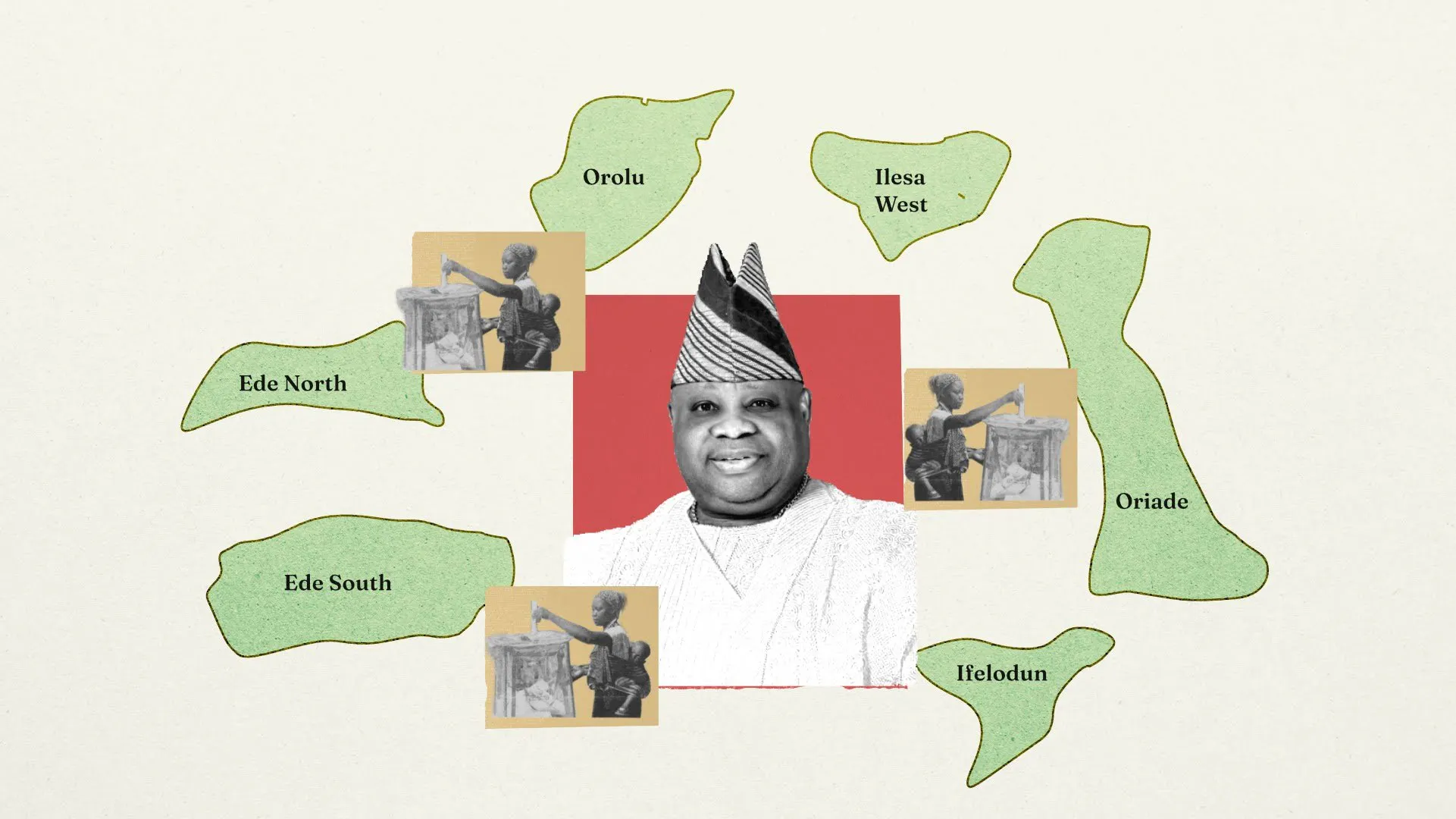
However, in Adeleke’s strongest bases, he was able to extend his lead. In Ede North, he won 35,427 votes against 10,283 for Oyebamiji. In Ede South, his home LGA, the margin was 26,188 to 6,219. He also flipped Iwo, Ayedade and Ayedire to ensure firm control of a zone he once represented in the Senate.
This meant the other zones would prove to be important. Ife provides four LGAs in Osun East, and its size and historical relevance ensure it remains a political bellwether. In 2014 and 2018, Omisore’s candidacy benefited from his support in that zone and, when he defected ahead of 2022’s election, APC was the beneficiary.
Ife Central and Ife East alone account for more than 71,000 valid votes. As such, Adeleke’s victory in Ife Central and Ife East would dent any hope Oyebamiji had of ensuring victory from his own expected party strongholds. Tellingly, Omisore had intended to run for governor himself and was not as active on the campaign trail as expected.
The APC’s four gains came mostly outside Adeleke’s strongest territory. In Osun East, it took back Obokun and Atakunmosa West, which had gone to Adeleke in 2022, while in Osun Central, it regained Olorunda. Irepodun, in Osun West, also returned to the APC column after Adeleke won it in 2022. These were not overwhelming victories. In Irepodun and Obokun, for instance, Oyebamiji’s margins were just 1,209 and 4,097 votes respectively.
Their importance was therefore less about the size of the victories than what they revealed about the map. Adeleke had expanded his reach in 2022, but could not hold every one of those gains in 2026. At the same time, his victories in Ife Central and Ife East showed that the APC’s traditional strength in Osun East was no longer enough to guarantee the party’s dominance there. Because governors also need to gain a quarter of the vote in ⅔ of the state’s LGAs, spread is important: Adeleke might have sacrificed some LGAs for more, but remained competitive enough that it counted where needed.
The 2026 map also shows that the shift was not uniform. Some LGAs have stayed with the same party across all four elections since 2014, even as control of the state has changed hands. Boripe, Atakunmosa East, Ilesa East and Ola-Oluwa have remained APC, but they are not interchangeable: their importance comes from their political geography and the networks attached to them.
Boripe, in Osun Central, is the clearest example. It has remained a consistent source of votes for the APC, even producing former governor Gboyega Oyetola. Ilesa East, Atakunmosa East, and Ola-Oluwa are more interesting because these margins have been narrowing. The consistent support does provide some assurance to the party, but even in areas where it has been popular, data shows it is susceptible to being flipped in future elections.
The LGAs that flipped in 2026 show how easily support can move between parties, while these four provide a counterpoint: places where a party’s local machinery has remained more durable than its statewide fortunes. The map is not divided neatly between Adeleke’s strongholds and APC’s strongholds. It is a patchwork of personal networks, historical party loyalties and increasingly competitive areas.
That makes the questions beyond 2026 less about whether Osun has political strongholds and more about whether those networks can survive changes in the people at their centre. Adeleke has run his last gubernatorial race, and Accord’s future strength will depend in part on whether his coalition can be transferred to another candidate. The same test applies to the APC networks that have survived successive changes in its candidates, leaders and fortunes.
The 2026 election showed the limits of treating Osun’s political strongholds as permanent. Some networks have proved durable, while others have moved with the politician who built them. That tension between fixed local loyalties and mobile political alliances is likely to shape the state’s next political map.
Credits
Editor: Afolabi Adekaiyaoja
Illustrations: Adeoluwa Henshaw