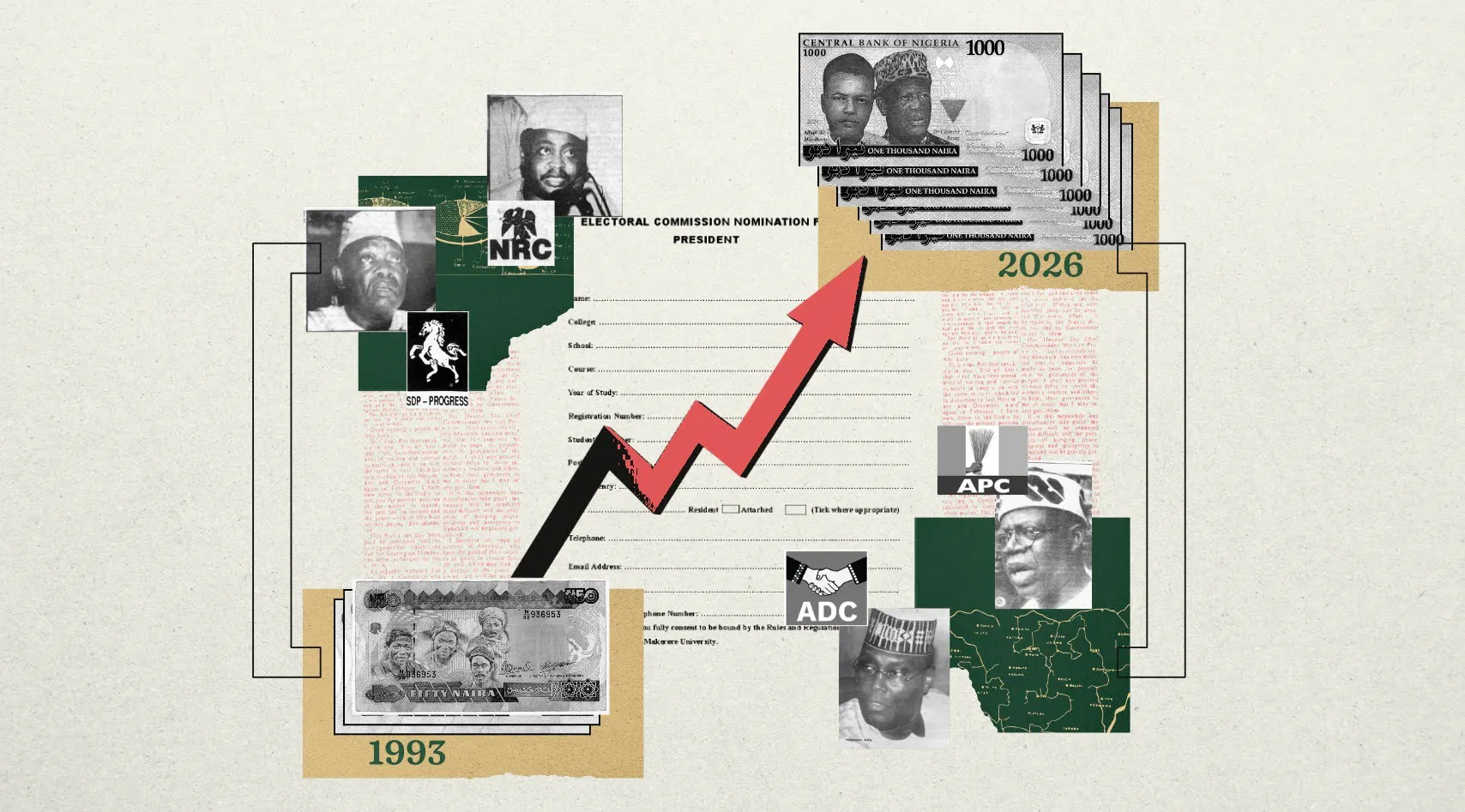
Running for President Used to Cost ₦1,000
Before a candidate can campaign, hold rallies or print posters, they first have to pay for the right to contest.
Ahead of the 2027 presidential election, most of the leading candidates have already spent tens of millions of naira to get a chance to make a case for why Nigerians should make them leaders.
Buying a nomination form alone, the first step towards the country's highest office, can cost as much as ₦100 million.
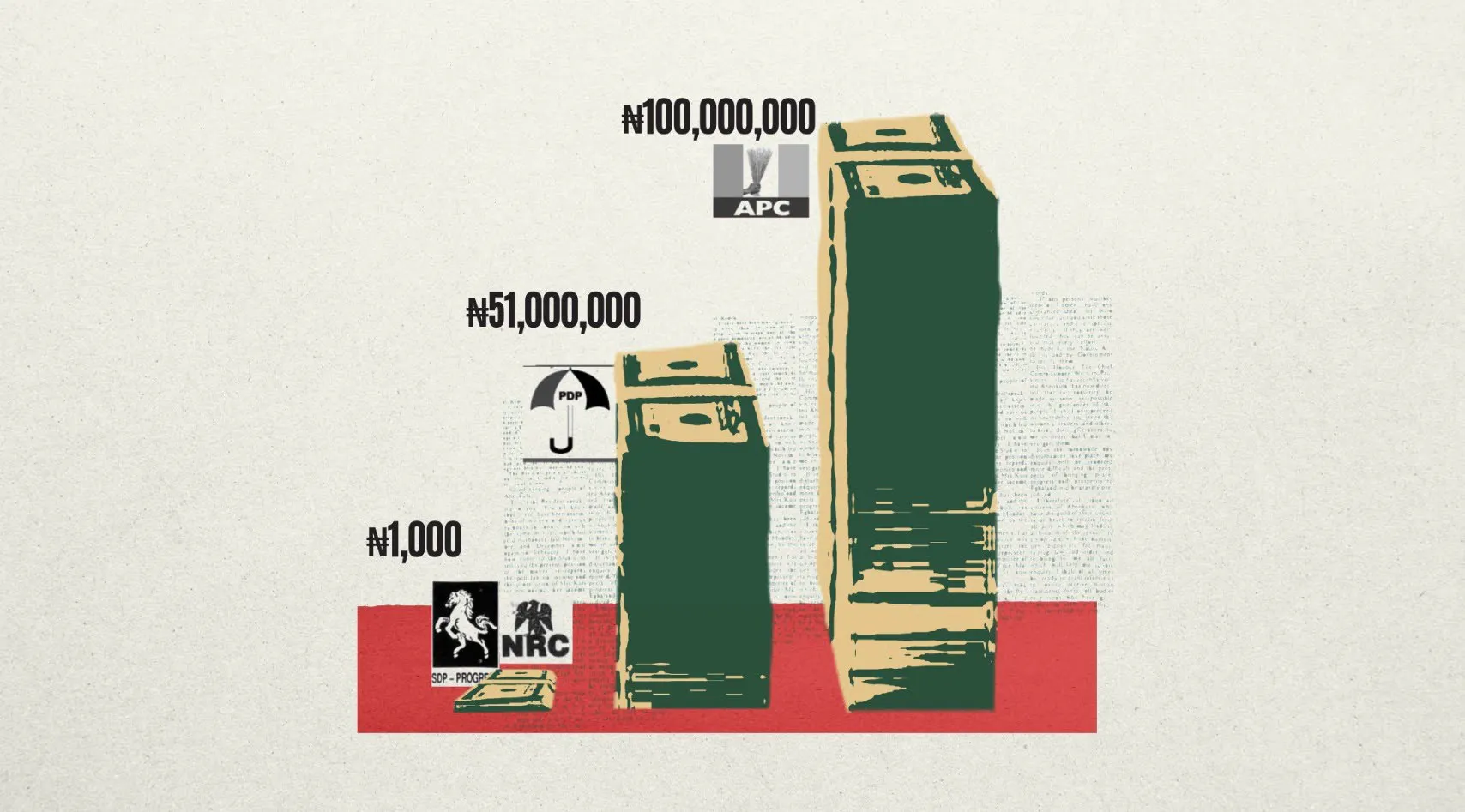
But there used to be simpler times, only about thirty-three years ago, when buying a nomination form cost only ₦1,000. That’s how much the National Republican Convention (NRC) and the Social Democratic Party (SDP) charged their candidates.
How then did contesting for public office become so expensive?
Now, there’s context to that ₦1,000 fee
When the first round of presidential primaries was conducted in 1992, the NRC charged ₦400,000 for nomination forms while the SDP charged ₦500,000.
At the time, The Sunday Magazine described the fees as deliberately prohibitive, arguing that they were designed to eliminate candidates who could not afford to compete. Across both parties, fewer than 30 aspirants bought nomination forms. One of the aspirants who was a victim of that high fee was Sarah Jibril of the SDP, who was locked out of the race because her cheque was not cleared.
The military government was unhappy with how the first primaries had unfolded. Following allegations of irregularities, the National Electoral Commission (NEC) cancelled the results, disqualified the leading aspirants and ordered the parties to begin again. During that second round, the nomination fee was slashed to just ₦1,000.
Hundreds of aspirants suddenly entered the race
By mid-January 1993, over 350 presidential aspirants had obtained nomination forms across the two parties.
The NRC field included figures such as Yakubu Gowon, Joe Nwodo, Dalhatu Tafida and Bashir Tofa. On the SDP side were Babagana Kingibe, Odumegwu Ojukwu, MKO Abiola and Atiku Abubakar.
The dramatic increase in applications showed how much the cost of entry determined who could even consider running.
Inflation isn’t enough to explain what happened next
Adjusted for inflation, ₦1,000 in January 1993 would be worth roughly ₦1.2 million in 2026. Because Nigeria's inflation calculations and consumer price basket have been rebased several times over the decades, this is only an estimate rather than an exact equivalent.
Even with that adjustment, today's nomination fees are in a completely different league.
For this year’s presidential primaries, nomination forms among the major parties ranged from ₦51 million in the Peoples Democratic Party (PDP) to ₦100 million in the All Progressives Congress (APC).
Compared with the ₦1,000 fee in 1993, that represents an increase of up to 9,999,900%.
One politician connects both eras
Few people illustrate this shift more clearly than Atiku Abubakar.
In 1993, he contested the SDP presidential primary that was eventually won by MKO Abiola. His nomination form cost ₦1,000.
More than three decades later, he won the African Democratic Congress (ADC) presidential primary after purchasing a nomination form that cost ₦90 million.
The same politician, pursuing the same office, entered the race under two vastly different financial realities.
What the minimum wage reveals
The contrast becomes even starker when viewed through the earnings of ordinary Nigerians.
In 1993, the national minimum wage stood at ₦250 per month. A worker earning minimum wage could theoretically afford a ₦1,000 nomination form after four months of saving every kobo.
Today, with the minimum wage at ₦70,000, a ₦100 million nomination form would require 1,429 months of complete savings. That's nearly 119 years.
Of course, no one actually saves every naira they earn. But the comparison illustrates how far the cost of political participation has drifted away from the economic reality of most Nigerians.
Applying costs more than the salary
The economics become even more striking when compared with the job itself.
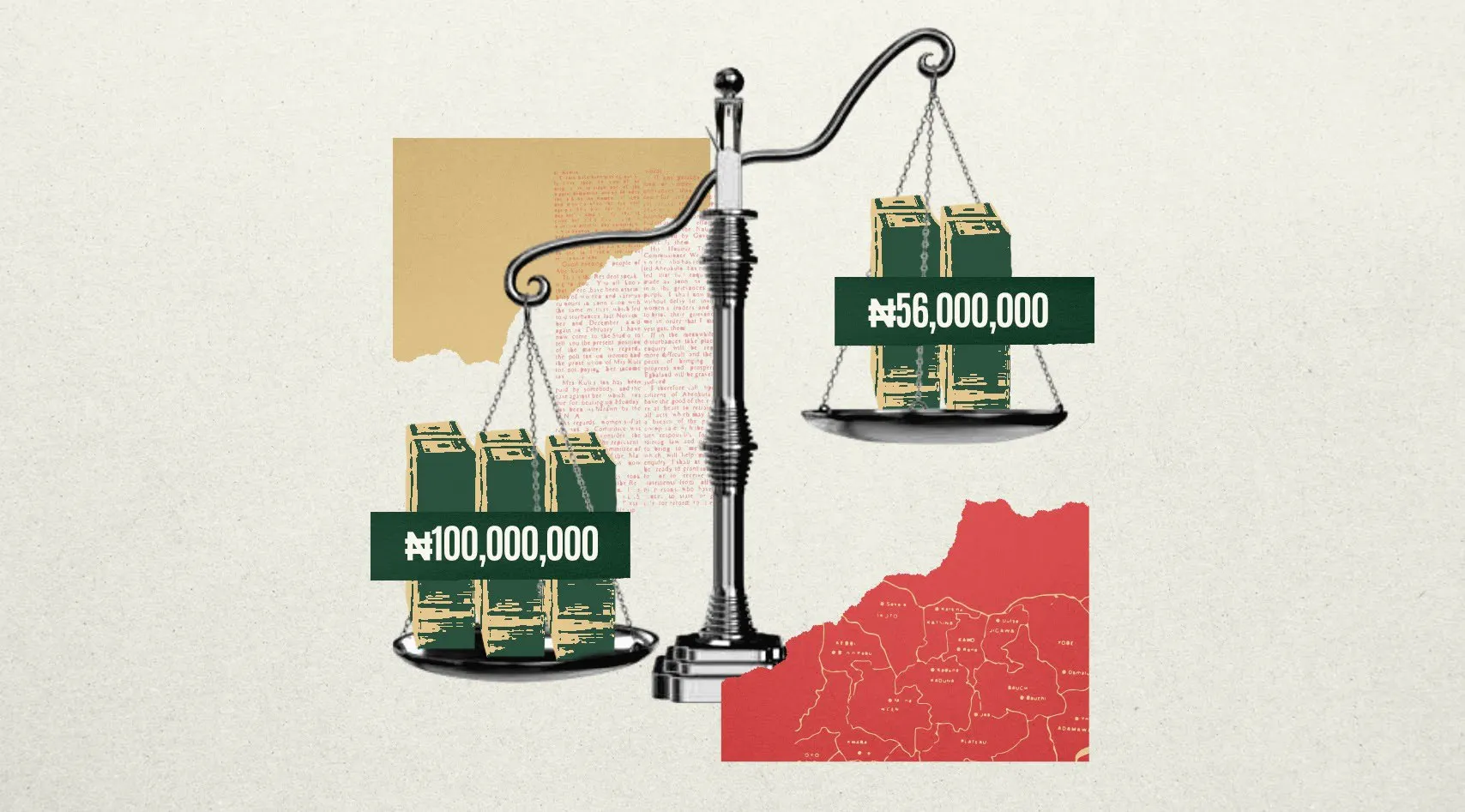
According to the Revenue Mobilisation Allocation and Fiscal Commission (RMAFC), the Nigerian president earns roughly ₦14 million annually. Over a four-year term, that amounts to just over ₦56 million in salary.
In other words, some candidates now spend up to ₦100 million simply to secure their party's ticket for a position whose official salary over four years is almost half that amount.
And that's before spending a single naira on campaigning.
The cost of entering politics
The explosion in nomination fees is not limited to presidential elections. Governorship, senatorial and other legislative nomination forms have also become progressively more expensive over the years.
Political parties often argue that these fees help fund their activities or discourage unserious aspirants. But critics stick to the point that they also narrow the field to wealthy politicians, political godfathers and candidates backed by powerful financial networks.
Thirty-three years ago, reducing nomination fees produced an explosion in the number of people willing to contest for president. Today, the opposite trend has become the country’s political reality.
The price of running for office has risen much faster than wages and much faster than the salary attached to the office itself. Before Nigerians can persuade voters that they deserve to lead, they must first be able to afford the price of entry.
Credits
Illustrator: Adeoluwa Henshaw