Public Health, Sanitation Issues, Sewage Management, Community Development, Non-Governmental Organizations, Water Supply Projects, Disease Prevention, Urban Planning, Innovative Solutions, Capacity Building
African Review . 01 October 1996 . Pg 70


Summary
Summary may not be accurate; generated by machine learning.
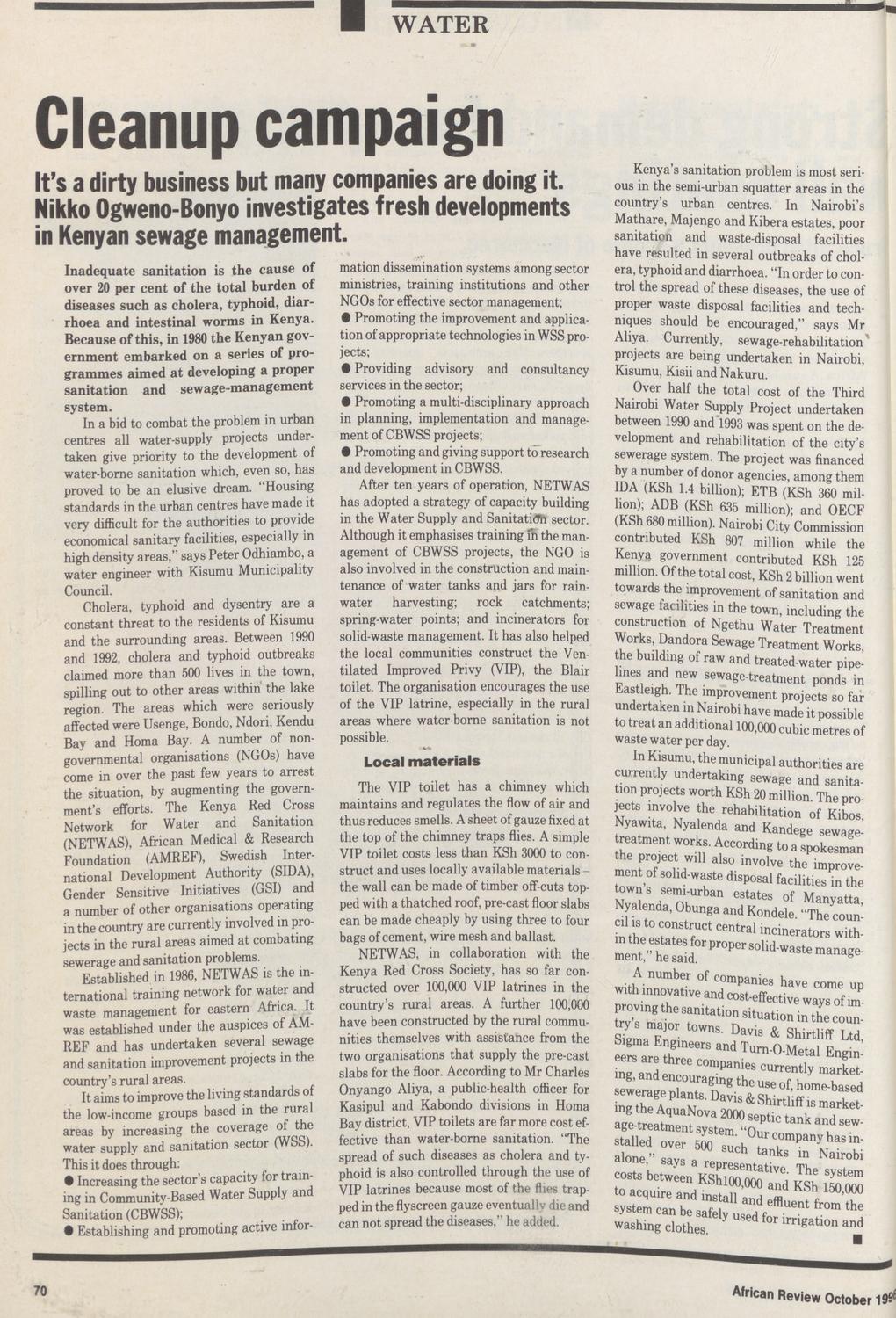
Kenya faces significant sanitation challenges, particularly in semi-urban squatter areas like Mathare, Majengo, and Kibera, where inadequate waste disposal leads to diseases such as cholera and typhoid. Since 1980, the government has initiated programs to improve sewage management, but high-density housing complicates efforts. NGOs like NETWAS and AMREF are actively working to enhance sanitation through community-based projects, including the construction of cost-effective VIP latrines. These initiatives have successfully built over 200,000 latrines, helping to control disease spread. Recent sewage rehabilitation projects in Nairobi and Kisumu aim to further improve sanitation facilities, supported by various donor agencies. Companies are also innovating to provide effective sanitation solutions in major towns.
Related Topics
Archived by: Ms Lucy Holliday
Donate now, and we'll archive in your name.