Capital City Relocation, Urban Development, Government Administration, Population Management, Geographical Features, National Identity, Infrastructure Planning, Environmental Considerations, Historical Context, Economic Factors
West Africa . 11 October 1982 . Pg 35


Summary may not be accurate; generated by machine learning.
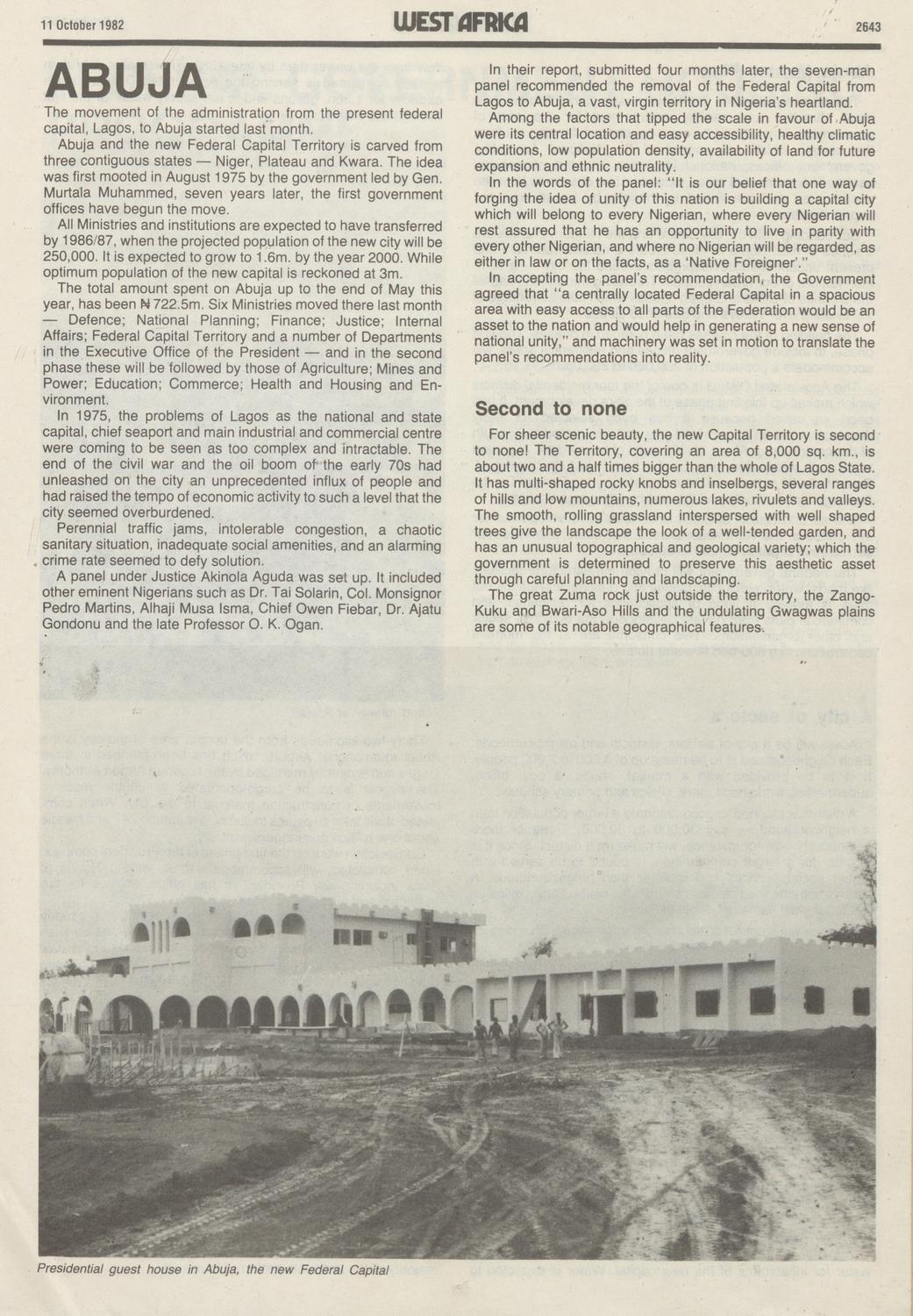
The relocation of Nigeria's federal capital from Lagos to Abuja began in October 1982, following a decision made in 1975 due to the overwhelming challenges faced by Lagos, such as traffic congestion and inadequate amenities. Abuja, chosen for its central location, healthy climate, and potential for expansion, is expected to accommodate a population of 250,000 by 1986/87 and grow to 1.6 million by the year 2000. The new capital territory, covering 8,000 sq. km., boasts beautiful landscapes and is designed to promote national unity among Nigerians. The government has already moved several ministries to Abuja, with plans for more to follow.
Related Topics
Archived by: Fola Fagbule
Donate now, and we'll archive in your name.