Cultural Communication, African Writing Systems, Ideographic Symbols, Colonial Impact on Culture, Yoruba Traditions, Nsibidi Symbols, Bamum Language, Cultural Heritage, Secret Societies, Historical Figures
Nigeria Magazine . 01 April 1987 . Pg 37


Summary
Summary may not be accurate; generated by machine learning.
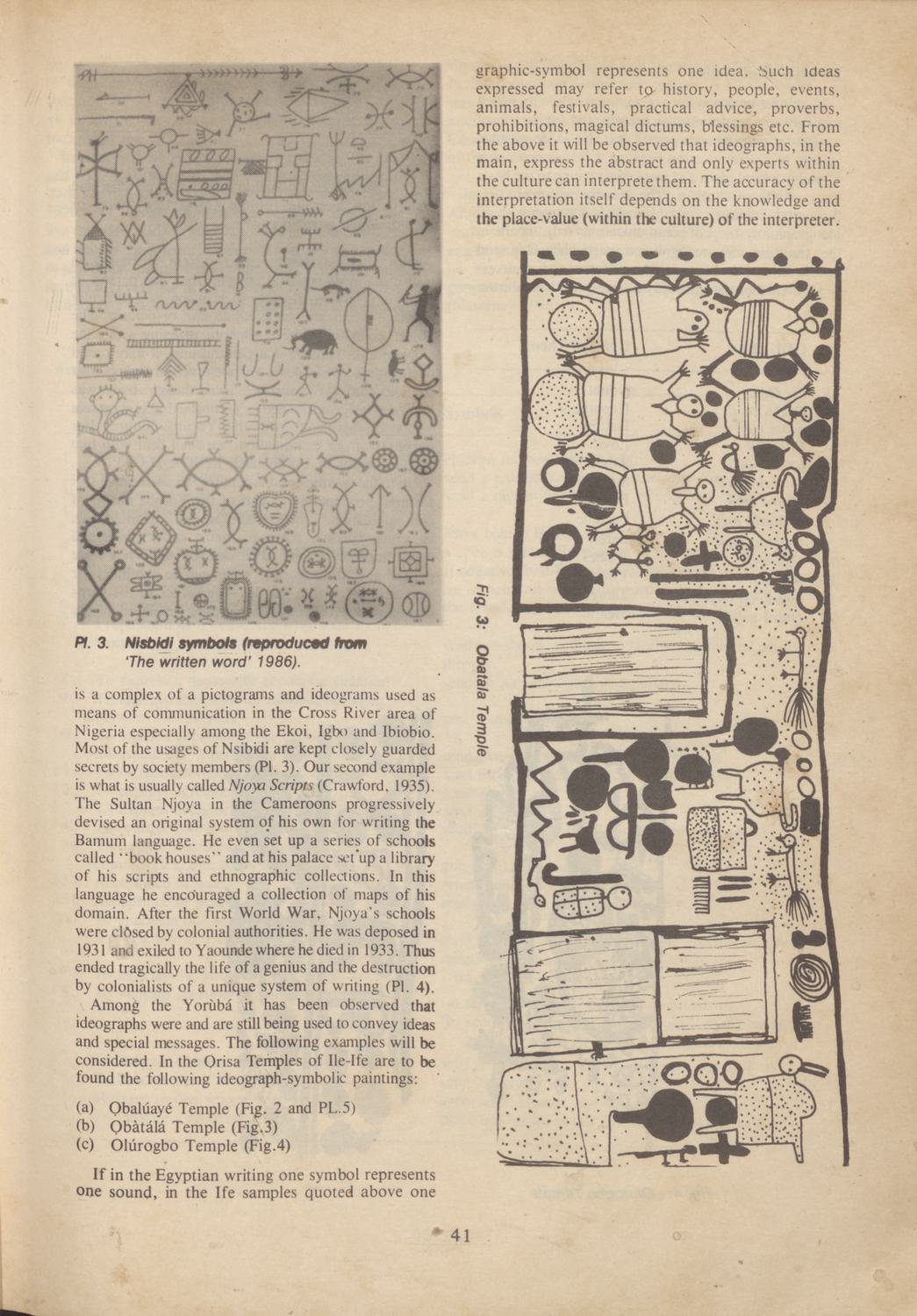
The text discusses the use of graphic symbols, particularly ideographs and pictograms, as a means of communication within various cultures in Nigeria and Cameroon. It highlights the complexity of these symbols, which can represent a wide range of ideas, including history, events, and cultural practices. The Nsibidi symbols, used by the Ekoi, Igbo, and Ibiobio people, are noted for their secretive nature, while the Njoya Scripts, developed by Sultan Njoya for the Bamum language, showcase a unique writing system that was tragically suppressed by colonial authorities. Additionally, the text mentions the use of ideographs in Yoruba culture, particularly in the Orisa Temples of Ile-Ife, where symbolic paintings convey important messages.
Related Topics
Archived by: Fuad Olalekan
Donate now, and we'll archive in your name.