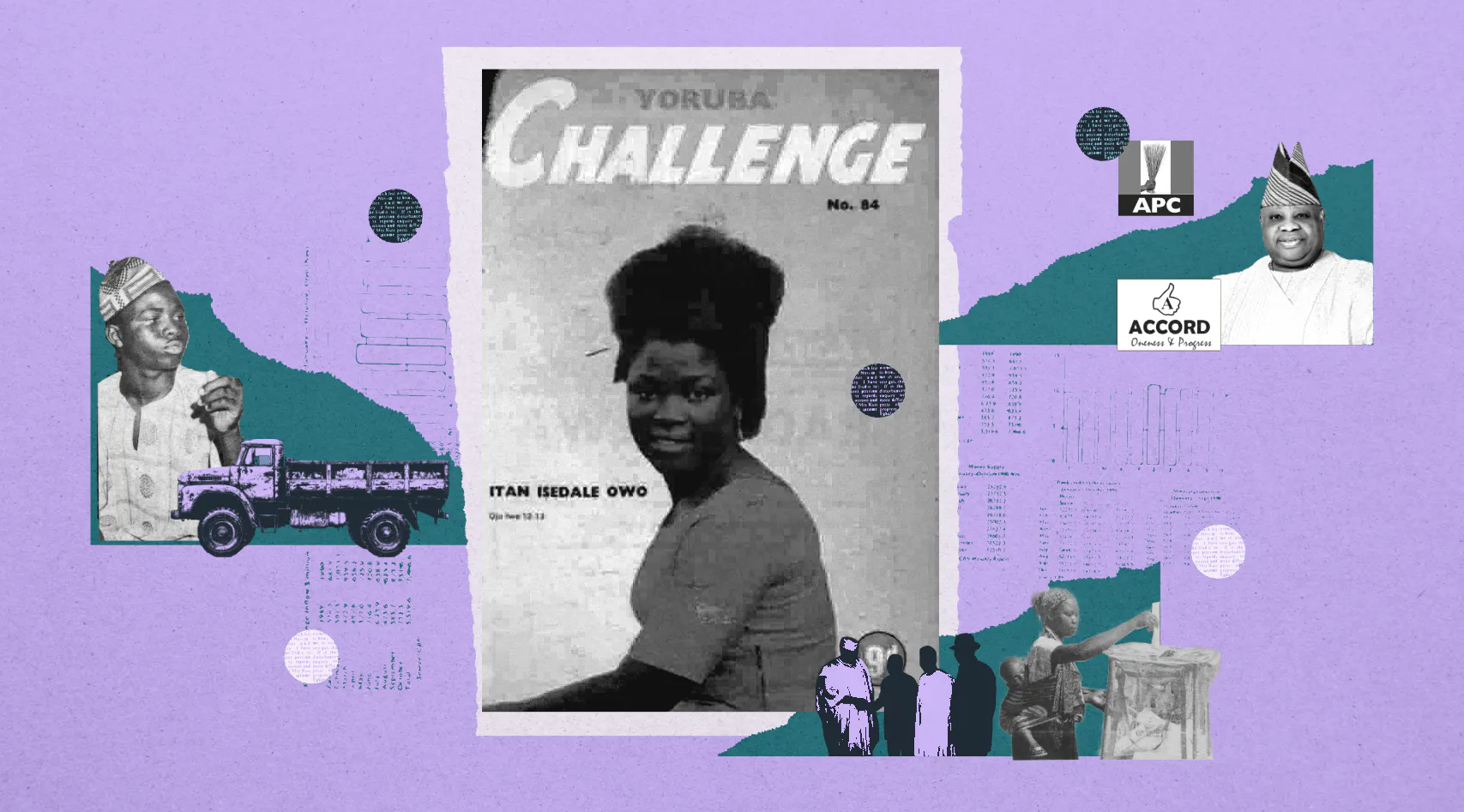
August Recap: Yoruba Challenge Has Joined Our Online Archive
Every month, when I start putting this dispatch together, I ask the digitisation team the same question: what did we actually get done this month?
Kehinde, who leads digitisation, sends me a list of the publications digitised and the number of pages we have made accessible. But something was different about this month’s list. A publication called Yoruba Challenge.
At first, I treated it like any other title on the list. Until Samson asked what turned out to be an obvious question: “Wait, is this our first non-English upload?” It was. Written entirely in Yoruba.
And that was when it struck me that we had just done something we probably should have made a much bigger deal about. Yoruba Challenge is the first non-English publication we have made fully accessible on our website, which means that, for the first time, you can visit our website and read a magazine written in a Nigerian language, going as far back as the 1960s.
Yoruba Challenge is a start. We also have Hausa publications waiting to be digitised and made accessible, and we are looking for publications in every Nigerian language we can find. There is more to do, and that is where you come in.
Every page we digitise has to be found, scanned, processed and made accessible. If you want to help us keep expanding what is available to everyone, you can fund the work by becoming a member.
Maybe next month, when Kehinde sends me that list, there will be another indigenous language publication on it.
Become an ARCHIVI.NG member and get updates straight to your inbox
What Happened in August 2026
Making sense of Osun
- Osun went to the polls this month to elect the governor who will lead the state for the next four years, and for most of election day, our team was online following what was happening and adding historical context where it was useful.
- We also developed an Election Context Card for the announcement of results, looking at how all 30 local government areas in Osun have voted since 2014. Instead of looking at the result as just a set of numbers, the card showed the voting patterns that came before it.
- Leading up to the election, we looked at another unusual pattern in Osun politics: since 1991, only one governor has completed two terms in office. We traced the state’s succession of governors and the elections that brought them into office.
- One video explainer traced how zoning gradually became an important part of how Nigeria’s political class decided who gets to contest for power, and asked a simple question: 27 years after zoning became a more established feature of Nigerian politics, has it worked for everyone?
- Our ECP article looked at why opposition parties in Nigeria have found it so difficult to collaborate successfully. Another video explored why Osun elects its governor six months before many other states.
- We also created an infographic showing how Osun voters have turned out on election day over the past 12 years, adding another layer to our coverage of the state’s electoral history.
- Outside ECP, our weekly carousel revisited a disturbing 1975 case involving four Lagos schoolboys who left home to buy textbooks and ended up kidnapped and sold far away from home.
- We also went back to 1989, when Prime People magazine asked Nigerians whether they would return ₦100,000 if they found it. The answers were as interesting as you might expect.
- On Previously in Nigeria, we returned to the mid-1970s, when Nigeria introduced mobile traffic courts to deal with the growing number of road accidents with speedy justice.
- Our work reached more than three million people this month and generated over 70,000 engagements. We also welcomed 8,000 new followers into our community.
Over 10,000 pages of Nigeria’s past now searchable
- We digitised 12,067 pages in August, just a few hundred pages short of July’s total. This month’s additions include several editions of the Daily Champion.
- On the website, we made over 10,000 pages of old newspapers and magazines accessible. You can now read editions of Prime People, Vintage People, and Viva Weekly from the 1960s to the 1990s, providing context for decades of politics, culture, business and everyday Nigerian life.
What’s Next: September 2026
With campaigns for the 2027 general elections now officially underway, we’re ramping up our Election Context Project coverage in September.
For starters, you’ll be seeing archival campaign posters every single day of next month, as we look back at how Nigerian politicians have sold themselves to voters across different elections and different eras.
And we have something else in the works. We’re working with an institutional partner on a project centred on one of the most consequential Nigerian publications of all time. I can’t say much about it yet, but you’ll start seeing results next month.
See you on September 27.
Credits
Editor: Samson Toromade
Cover Design: Adeoluwa Henshaw