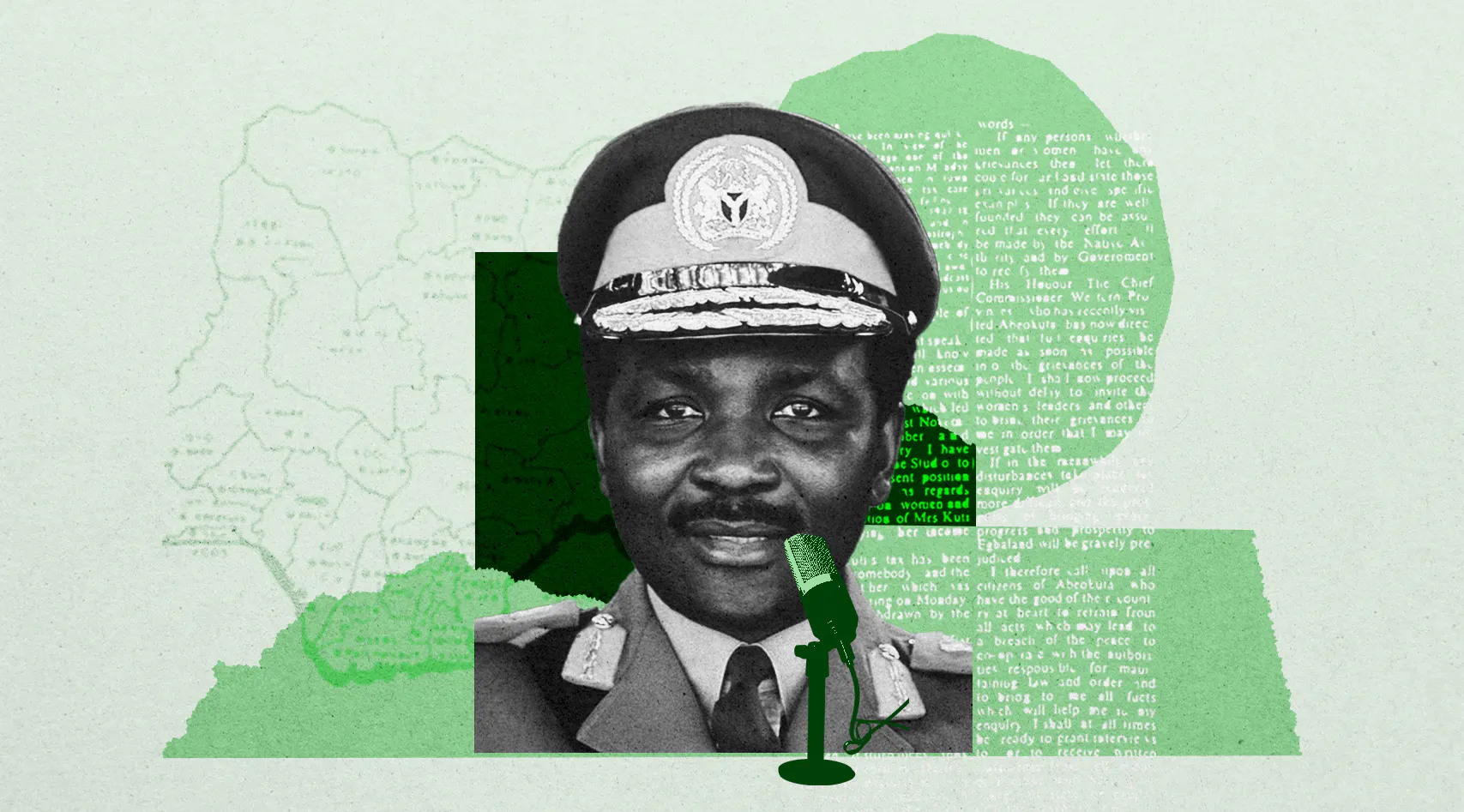
October 1, 1970 Independence Day Speech by Yakubu Gowon
Ten years ago, on October 1, 1960, Nigeria became an independent, sovereign nation. On that solemn occasion, the late Alhaji Abubakar Tafawa Balewa, as Prime Minister of the Federation of Nigeria, promised on behalf of all his compatriots, to defend the unity and integrity of the nation.
At the beginning of the second decade of our nationhood, I wish to reiterate this resolve on behalf of all Nigerians to defend the unity and integrity of the nation. In discharging our responsibilities, it is our hope to ensure progress and social justice for all the citizens of our great country.
In ten years of independence, Nigeria has passed through a number of crises culminating in the recent civil war.
National history
Our people had to fight a war they did not want, but these events are now part of our national history, and represent the price we have had to pay to build a strong and united nation.
All Nigerians are unanimous in their desire to live together in peace and harmony with one another, irrespective of ethnic origin, religion or creed. We cherish peace and stability; we desire progress, justice and the right atmosphere to live happily as one family and bring our children up as citizens of one united country.
Nigeria is blessed with abundant natural resources, manpower and has great potentialities. Having passed through the greatest test which can confront any nation. Nigeria stands at the threshold of an economic revolution.
It remains for all of us of this generation, to whom the responsibility has now passed, to do our duty to our country, ensuring at all times that we do nothing that will deter succeeding generations from building a stable nation.
On this tenth independence anniversary, I call on Nigerians wherever they may be to rededicate themselves to the service of our nation and to bring the same energy, the same devotion and the same loyalty which they displayed in the struggle to preserve the sovereignty and the integrity of their country, to bear on the great task of reconstruction and development that lies ahead.
The great objective is to win the peace in Nigeria and fight with determination, tenacity and courage to free not only our land, but all of Africa from all foreign domination as well as from poverty, ignorance and disease.
The Federal Government will launch a new four-year development plan shortly. A great deal of thought and careful preparation has been applied to the planning processes. All the state governments in the federation have been fully consulted in formulating this national plan.
The plan of each state government has been carefully dovetailed into the overall national plan, in order to ensure, as much as possible, the even development of the country and to correct the imbalances of the past.
When the planners and the policy makers have done their work, it will remain for the people themselves to make these plans active. I am confident that they will give all the zeal and determination required to enable our united hopes and aspiration to be realised.
Significant aspects of the plan concern national security, agriculture, education, social welfare, transport and communications. These are very important matters which closely affect all Nigerians and their general wellbeing.
One of Nigeria's greatest assets is the thousands and thousands of healthy children in training institutions in all parts of the country — intelligent young people determined not only to succeed but to defend the liberty and unity of their home and strive for the advancement of their motherland. Therefore, a large part of our resources is being devoted to providing institutions of learning necessary for the education and training of the younger generation, so that the necessary training and manpower will be available for the development being planned now and in the future.
The Nigerian population is constantly growing, and is now estimated at 66,000,000. We have many mouths to feed. Therefore, we recognise the importance of agriculture and are determined to accord it the place it deserves in our planning and thinking. It is true that Nigeria feeds herself at present and sustains her national economy by her agriculture, but we must now revolutionise farming methods and animal husbandry.
Methods and directions will be changed to bring about this transformation. Agricultural extension services will be made available to farmers, so as to bring the latest methods and techniques to the countryside and farmers will be assisted to understand and adopt them. Agricultural credit facilities will be provided and methods and practices must be sought constantly to establish Nigeria as a great granary.
These far-reaching developments cannot be achieved without vast changes in transport and communications services and facilities. The Federal Government has embarked on an immense national road programme to facilitate the transportation of goods and people.
The airways, waterways and railways will be developed, not only to ensure the easy flow of goods and food, but also to increase and improve contacts between our people and, thus, enhance national unity. In the course of the next year, telecommunications throughout the country will undergo a complete revolution. This is not just engineers' dreams, for the structures are already rising all over the country. Better communications will serve to bind Nigerians together even more firmly.
Thus, the 1970/74 National Development Plan will reconstruct the areas damaged by war while accelerating development throughout the country by reorganising, restructuring and modernising agriculture, transportation systems and communications. It will be a tremendous thrust forward for the economy.
Political stability
While this plan places greater reliance on Nigeria's own efforts and resources, we will welcome external financial assistance particularly in the form of programme support and flexible sectoral loans which can be utilised promptly.
What we have achieved so far, taken together with what we expect to achieve in the next four years, will, we hope, give our country political stability — thereby providing the economic and the industrial strength which will enable us contribute effectively to world peace and progress; protect ourselves against destructive forces, and provide for our people a better life.
In ensuring our nation's unity and integrity, we are also very mindful of the legitimate interests and aspirations of our African brothers and black peoples everywhere.
We recognise that Nigeria cannot achieve the lofty goals we have set out for ourselves without defining our national objectives, especially concerning the political future of the country. A programme will shortly be announced and will set out what has to be done before a return to civilian full rule.
On the international scene, our primary concern is naturally for Africa and the Organisation for African Unity: the total elimination of colonialism and imperialism; the growth of unity and respect for nations and existing national boundaries. We also consider it our duty to work relentlessly for the acceptance of the equality of man everywhere irrespective of his colour, creed or religion.
Outside our continent, we stand non-aligned and support the principles and ideals of non-alignment. We continue to value our association with the Commonwealth. We are ready and willing to make our genuine contribution to world peace and the advancement of mankind. We reiterate our strong belief in and support for the United Nations organisation. We congratulate it on its twenty-fifth anniversary this year, 1970.
Today, Nigerians are ready to organise a happier nation. The anxieties and uncertainties of the first decade have passed away; all Nigerians are now reunited and free from insecurity. The wounds of war are healing. Reconciliation has gone apace with enthusiasm, exceeding the expectations of Nigeria's most optimistic friends and perplexing her detractors.
Our gratitude is due to all friends of Nigeria in Africa and other lands, for their belief in the need for peace and progress in this part of the world.
As to those nations and peoples, who questioned our sincerity and who still harbour doubts concerning the ability of our people to reconcile, I ask that they judge us only by what we do.
Meanwhile, Nigerians, with renewed confidence and a fresh sense of national purpose, resume their onward march towards a better life of social justice, economic prosperity and political stability.
So help us God.
Source: New Nigerian