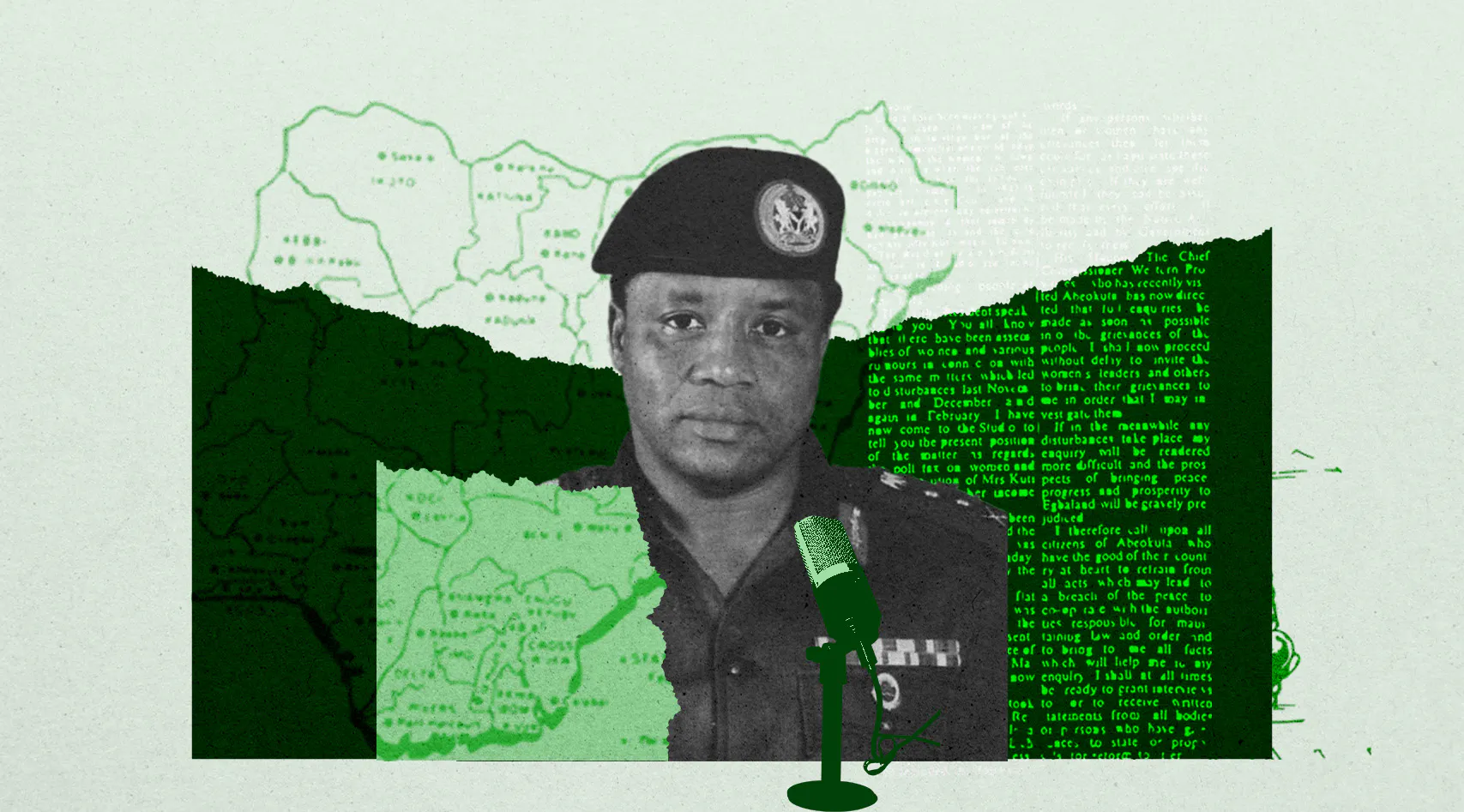
October 1, 1986 Independence Day Speech by Ibrahim Babangida
Today is the 26th anniversary of our country's independence. Like all others, this anniversary is an occasion for reviewing our performance so far, for assessing how far we have made progress towards realisation of the hopes and dreams of independence, and what we must do to ensure their greater realisation. It is also an occasion for thanksgiving to God for our continuing survival as a dynamic nation.
As you well know; the Armed Forces came back into government because of the grave and imminent dangers which faced the country. We came back with a determination to grapple with the problems of gross mismanagement of the economy, social indiscipline, corruption, greed and the loss of a common national sense of direction. Many of these problems are unfortunately still with us.
It is clear that the damage to our national life could not be repaired in a short time. However, the resolve of this administration to reverse the trends of the past and set a new course for the future remains unflinching.
I cannot overemphasise our conviction that we have the men and women of vision and ability to achieve our national objectives. The task before us on this anniversary is to rededicate ourselves to those objectives, and to recognise those common characteristics which bind us as a nation marching together on a difficult road of economic, social and political development.
But this is not a task for government alone. As farmers, workers, businessmen, teachers, doctors, civil servants, young and old, the challenge is to all of us march forward together.
Responsibility
I am aware that the general public is seriously disturbed about the recent increase in the incidence of armed robbery and general insecurity, particularly in our towns and cities. Government is fully conscious of its responsibility to ensure that all law-abiding citizens are free to go about their business without fear of their lives and property.
Steps have been taken to provide the law-enforcement agencies with the necessary equipment to tackle the problem effectively and expeditiously. You are no doubt already seeing some of the results of the offensive which the police has recently launched against the menace of armed robbery.
This administration is determined to ensure that the offensive is vigorously pursued and sustained. To this end, new arrangements are also being worked out for the re-organisation and retraining of the police force in order to strengthen their capability in crime detection, prevention and punishment.
A deliberate effort is being made to shift the emphasis away from the narrow focus of punishment to increasing effective investigation; and the arrest, conviction and punishment of criminals.
I would like here to commend the services of public spirited citizens who are increasingly coming forward to give information on the movements and activities of suspected criminals.
As an attack on a basic cause of crime, government intends to complement the current police action with other positive measures designed to provide gainful employment.
The current Structural Adjustment Programme embarked upon will help in generating greater employment opportunities, and therefore provide further avenues along which citizens can channel their creative energies, and stay out of trouble. I wish to assure you that we are determined to do all that is necessary to bring and keep the situation under control.
Economic and financial issues
Fellow Nigerians, you will recall that a year ago, we had to declare a state of economic emergency. In my address to the nation last June, I dealt at length with the economic situation and indicated some of the measures we envisaged in our efforts to deal with it.
As you all know, developments in the international oil market over the last eight months resulted in a sharp decline in our foreign exchange earnings. These developments could not have come at a worse time so soon after we had rejected the IMF loan option and decided collectively to find solutions to our economic problems on our own volition and at our own pace. We remain committed to that spirit of national honour and self-reliance.
Therefore, this administration decided to embark on a structural adjustment programme which it is convinced will produce effective and more lasting solutions to our basic economic problems.
The programme includes measures to find a more realistic rate of the naira, reduce import dependence, make the economy less dependent on a single product for foreign exchange earnings, and promote greater reliance on local raw materials for a healthier industrial development.
I wish to stress that a key element of this programme is the Second-Tier Foreign Exchange Market (SFEM), which commenced operation on September 29, 1986. Much has been said… *(missing fragment).
Essentially, the intention is to allow the naira, which we now all agree is over-valued, freely to find its real value in relation to the major international currencies. The system will render various bureaucratic controls like import licensing unnecessary, and assist a more rational allocation of our financial resources.
I wish here to re-emphasise some key advantages that we expect from the new system. First, it will reduce the nation's dependence on imports of food, fibre, materials, and consumer goods, and thereby redirect our production towards the use of local raw materials.
Second, it will redress the gross imbalance in urban-rural incomes and welfare. Agricultural exports will now command a higher naira value from the conversion of world market prices using the higher second-tier market rate.
That would tend to boost the naira value of agricultural exports and domestic substitutes of imported food items, raise rural incomes and encourage more farmers to expand agricultural production. The increase in agricultural production will also make available to our industries local raw materials and reduce their dependence on imported substitutes.
This, the expected greater inflow of foreign resources as the exchange rate becomes more realistic will be used to finance the importation of essential capital goods, complementary industrial*… (missing fragment).
This will enable industries to increase the utilisation of their installed capacity, and generate more employment, since employers will increasingly be able to recall workers previously laid off.
How, we must also be prepared for some less pleasant side effects that may result from the introduction of the second tier market. There may be an initial rise in the prices of import-based goods.
Nevertheless, it is expected that the increase in production which is likely to accompany the operation of the system will reduce this tendency over a period of time, and prices will subsequently stabilise at a reasonable level.
Adjustment
Imported consumer goods will cost more. The essence of structural adjustment, if it is to have enduring benefit, is for consumers, especially the urban elite, to adjust their consumption habits in favour of domestically-produced goods and services and generally to concentrate on essentials rather than on luxuries.
Our collective efforts as a nation must focus on ways to ensure that the domestic economy will be able to respond to these new economic opportunities in the production of import substitutes at prices that the average consumer can afford.
Again, the new system places a premium on operational efficiency by all industrial and commercial establishments. The era of inefficient performance and easy profit will be over.
The impression exists in certain segments of the general public that the government which had rejected the IMF loan is again bringing it in through the back door, by the introduction of the Second-Tier Foreign Exchange Market.
I would like to disabuse the minds of all Nigerians on this issue. We have not sought, we have not obtained, and we have no intention of obtaining any loan from the IMF. The economic measures that are being implemented now are those which we, on our own, have carefully evaluated and considered suitable.
They are not based on any conditionalities imposed by any foreign*… (missing fragment).
It must at the same time be recognised that Nigeria is a financial member of the IMF and like all other members of that body, can use the umbrella of that organisation to cultivate favourable acceptance of its structural adjustment package or any other programme, by the international financial community.
I also wish to reaffirm that this administration will do all it can to ensure an adequate funding of the Second-Tier Foreign Exchange Market primarily through its own resources, and only secondarily through legitimate and honourable help from other sources including foreign equity participation in companies quoted on the Nigerian Stock Exchange.
Political and external issues
This administration has often stated its determination to find lasting solutions to the political and social problems facing the country.
Since our independence in 1960, we have experimented with the parliamentary and presidential systems of government. It seems that neither system has been able to deal adequately with some of our more thorny political problems.
As you know, our ability to achieve our goals in the economic and social spheres depends, to a great extent, on the existence of a viable political system which will guarantee stability. This is why we attach great importance to finding a new system that will provide this kind of political environment.
The nationwide debate on this subject has just ended. From all indications, the response and contributions of the generality of the people have been very encouraging. The political bureau is expected soon to submit its report with recommendations on a future political course for the nation.
We will study the report and its recommendations carefully and, therefore, announce a comprehensive political programme for the return to civil rule.
*(Missing fragment) this administration towards achieving the objectives of matching our defence posture with our dynamic foreign policy and that of maintaining the officers and men in a state of constant operating and combat readiness.
Efforts have been stepped up to complete many of the advanced ongoing projects relating to the welfare of our soldiers such as the construction of barracks and officers quarters and the provision of drugs and equipment for the military hospitals.
There has also been substantial improvement in the training of military personnel. In pursuit of our policy of self-sufficiency, the Defence Industries Corporation has made appreciable progress in its effort to produce ammunition for the use of Armed Forces.
In fulfilment of the aim of this administration to ensure a dynamic and Africa-centred foreign policy, we have vigorously pursued various activities aimed at restoring balance, credibility, clarity and consistency to Nigeria's foreign policy.
Consistent with our policy, we have reopened our borders and thus removed a major irritant in relations with our neighbours. We believe that this action has restored Nigeria's relationship with her neighbours to one of close consultation, mutual trust and friendship.
Similarly, our belief in the Economic Community of West African States (ECOWAS) as an important vehicle for sub-regional integration and development was demonstrated by our hosting of the 13th ECOWAS summit in Abuja.
In addition, we have allocated land in Abuja and pledged ₦5 million to that organisation to enable it construct its permanent headquarters. In appreciation of our commitment to the community, Nigeria was re-elected as chairman for the second term. This unprecedented demonstration of trust bestows on us a heavier responsibility to strive harder to achieve the objectives of ECOWAS.
At the beginning of this year, I had the pleasure to open the 45th ordinary session of the coordinating committee of the Organisation of African Unity (OAU) for the liberation of Africa which we hosted in Lagos. In the wake of the criminal attacks by the South African defence forces on the frontline states of Zambia, Zimbabwe and Botswana, we dispatched a special envoy to reiterate our total commitment to the liberation struggle. In addition, we gave immediate financial assistance to these… *(missing fragment)
Consistent with our declared position in Southern Africa, we proposed at the just concluded 8th summit of the Non-aligned Movement at Harare: the establishment of solidarity fund for Southern Africa, and the creation of a strategic stockpile of relief goods for the frontline states.
These proposals were in anticipation of the negative effects, on these states, of the imposition of sanctions by the international community against apartheid South Africa. We are glad that these two proposals were adopted by the summit. We shall continue the twin struggle for the independence of Namibia and the eradication of apartheid until victory is won.
Fellow Nigerians, you are aware of the bad image projected for this country outside our borders, especially by some of our citizens visiting other countries. By our behaviour in these countries, we have eroded the credibility of the average Nigerian as well as that of the state. I appeal to you, individually and collectively, to rebuild our image abroad. We must create an image of our country which can make us proud as Nigerians.
Sense of pride and patriotism will enable us to reverse the current unfavourable image. I hope, therefore, that government will not be forced to impose corrective measures in order to protect the image of the nation both at home and abroad.
Government is fully aware of the financial difficulties which most of us have faced because of the hard economic conditions and it appreciates the support and sacrifice. We must be ready and willing to make more sacrifices, if the situation so demands, in order to restructure the economy and to find lasting solutions to our problems.
When the time is appropriate to review or relax any of the stringent economic measures imposed, we will not hesitate to do so. In this regard, I am glad to announce that the economic recovery fund deductions which have already been made over the past year from the wages and salaries of employees earning ₦3,500 and below will be refunded to them in full before the end of the year.
In addition, further deductions in respect of all categories of employers, employees and pensioners will stop as from today. Furthermore, government's policy favouring the periodic review of fringe benefits to all categories of workers, subject to the approval of the Minister of Employment, Labour and Productivity remains unaltered.
In order to assist our workers to fight inflation and the hardship caused by a long distributive chain which is characteristic of our economy, government will give every active support to workers consumers cooperatives.
In this regard, the government accordingly directs sense of pride and that all employers of labour are enjoined and authorised to encourage and assist workers’ cooperative societies by deducting agreed and approved contributions from the wages and salaries of the workers, and by paying such contribution over to the cooperative promptly, provided such societies are duly registered under the cooperative law.
Manufacturers are equally enjoined and authorised to sell consumer products directly to consumer cooperatives duly registered under the law, provided they have the support of the registrar of cooperatives.
Government has reconsidered the closure of the University of Ife and the Kaduna Polytechnic which resulted from the recent unfortunate events in our universities and other tertiary institutions.
Accordingly, government will soon allow the institutions to reopen. However, university students and teachers and indeed the whole society, must realise that the cause of education and of natural development is not promoted by violent and destructive protests nor excessive reaction to objectionable measures.
We must all exercise due restraint in all our undertakings and do nothing that will tarnish our image or slow down our progress as a nation. We must not dissipate our national resources on futile confrontations.
Fellow countrymen and women, today we face several challenges: to work for political stability and peace in order to pursue our economic development plans to fruition; to sustain our efforts with courage and the confidence that we are the architects of our own fortunes, to carry through and implement effectively our programmes of recovery.
We face the challenge of increased food and agricultural production ,of creating employment In all sectors, and bringing down inflation by greater self-discipline, hard work and partnership between government and all sections of our people.
We face the challenge to sustain our faith in social justice for all our people, so that when injustices are encountered in our society, we will confront them with determination together as one people. Given the complex nature of our society, this government will always seek to act impartially and in the best interest of the nation.
I wish to remind all our citizens of our motto: unity and faith; and in the face of divisive forces and the cynicism of those who would be happy to see us fail, I appeal to all our people to maintain their faith in our national unity.
We have sustained already one year of economic stringency and sacrifice. On behalf of this administration, I sincerely thank all our citizens. The challenge of the present economic structural adjustment is to see it through until the tide turns and we begin to see our efforts bearing fruit.
To do this, we must pull together all sections of the nation, in faith and tolerance, courage and endurance until the dawn of political stability and progress, economic recovery and social justice.
Fellow Nigerians, there comes a time when a people must put aside all other considerations and do what needs to be done to ensure political and economic survival and restore the dynamism of their nation.
This is such a time. I have no doubt that together, with our faith in God and confidence in ourselves with determination to succeed, this nation will overcome its present challenges and stand again proud to be itself. Let us avoid any faintness of heart, and let us rededicate ourselves to the struggle.
I thank you all and wish you a happy twenty-sixth anniversary. Long live the Federal Republic of Nigeria.
- The areas marked as “missing fragment” lack only a few words within the same sentence, as those portions were badly damaged in the source from which the speech was transcribed.
Source: Daily Times