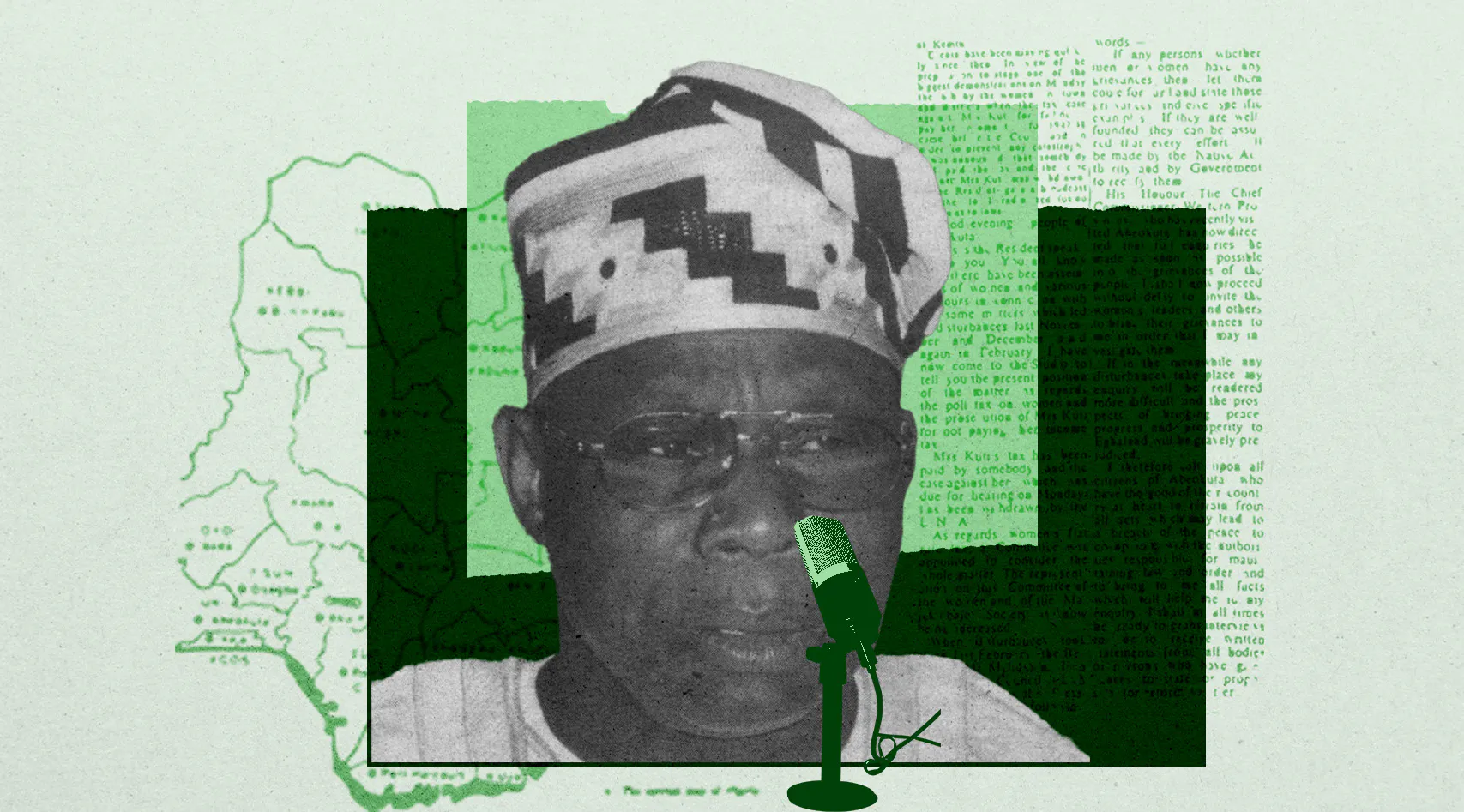
October 1, 1999 Independence Day Speech by Olusegun Obasanjo
Fellow Nigerians,
I have chosen today, the 39th anniversary of our independence to address you on an issue which I consider of the utmost Importance to all of us Nigerians. It is not about what we have so far achieved in our country, neither is It so much about what we hope to achieve in the future. I wish, instead, to think along with you about the moral foundations that should govern all our actions, as we continue the search of a just, free and affluent community in Nigeria. It is opportune to do this at this relatively early stage in our administration and as we are at the threshold of the third millennium. The new course we are about to chart will enable us to meet the demands of the next century.
We have experienced, in the short span of 39 years, what many other countries have undergone in a hundred years and more. We have seen and suffered through a tragic civil war. We have witnessed violent seizures of power. We have written and discarded numerous constitutions. We have experimented with many visions of the role of the state in our lives. We have continuously agonised over what should be the proper relations between the Federal Government and the constituent states of the federation. Our economy is in shambles, our social services in disarray. For these and many more reasons, there have indeed been times when many Nigerians have wondered aloud whether the very idea of Nigeria is a viable one, whether it is a powerful enough idea to override all our fears about ethnic and religious discrimination, for instance. In fact, even as recently as May 29 of this year, when our administration took office, some Nigerians were still asking, can we really make it as a united country? Can we, even in a democratic setting, rise above the divisive forces in our society? Will the freedoms guaranteed by democracy, in fact, not increase our tendency towards quarrelsomeness and divisiveness?
But there is an alternative view of our destiny, equally strongly held by a vast majority of our countrymen. That view is that there must be some divine purpose behind everything that has happened to us as a country.
For even in the darkest days of the republic, during the civil war, for instance or in the more recent days of tyranny, many perceptive Nigerians have stubbornly held on to two basic constants of our existence, namely, that Nigeria shall remain one and indivisible: and that it shall be governed by people through their representatives, and in accordance with the law.
Indeed, when you consider the abundance of our human and material resources, our energy as a people, and our seeming exemption from the terrible natural disasters such as earthquakes, hurricanes, typhoons and drought that afflict so many other countries, it is tempting to conclude that we are without doubt, a blessed and fortunate people. And that all we need to conquer therefore is not nature, but only ourselves.
Let me remind you that human societies never grow to their highest potential merely by upholding the pre-eminence of material values. A great society does not fully thrive merely by offering its citizens hospitals and water, electricity and good roads, schools, affordable fuel, security from external aggression, and protection from the criminals in our midst. These things are important, and we will continue to strive to make them available to the largest possible number of our citizens. But material wellbeing alone can just as easily be provided by a monstrous tyrannical state as by a democratic order. Nigerians, however, have overwhelmingly rejected tyranny and dictatorship in favour of democracy and freedom. And it must follow from this that there is something more we need from life, something more fulfilling for us as citizens in a dynamic society, which we expect to derive from a democratic culture.
It is this extra quality of our lives as citizens, this essence that transcends material values, which I define as the anchor, the centre, the moral and spiritual core that must bind and hold together everything that we do as government, and as citizens of this country. It is also the absence of this centre that has earned us so many wasted, frustrated years; so many years in which we have merely thrown money at our problems; years in which every individual has simply looked out for himself, not caring for what happens to the commonwealth itself.
When I took the oath of office last May, it was very clear to me that our administration had to quickly propose a new moral order that was absolutely essential, if we were to fully understand our problems, and move promptly towards resolving them. As I surveyed the canvass of our national life, I saw little more than confusion, greed, corruption in high and low places, selfishness, pervasive lawlessness and cynicism. The very state itself, to which we were all required to be loyal, had become a state full of malice and meanness. Public officials appeared to have forgotten what selfless service meant,. Private citizens felt a profound distrust of, if not hatred for the state.
But the new moral order which we are anxious to put in place not only had to be simple and straightforward, it had to be permanent and applicable in all circumstances. And it had to be so structured as to command the voluntary support of a majority of Nigerians. For without their support, the entire project would be doomed to failure.
Now, what is this new moral order that I speak of this anchor, this centre? First of all, we all readily admit that we do have a number of basic rights which are guaranteed by the constitution, and which can and should routinely be protected through our courts and our legislatures. But the constitution and our laws do not always specify in detail what our responsibilities are. Yes, we are obliged to pay our taxes and other lawful levies, and generally observe the laws of the land; and when we do not do so, the law sometimes catches up with us, and we pay the stipulated penalties.
But the fact remains that the responsibilities of the citizen that truly matter are not written in any books, are not encoded in any statutes. Those responsibilities come from inside us. They primarily enjoin us to be our brother's keeper, to do to other citizens as we would want them to do to us. We accept and discharge these responsibilities because we all live in a community, a community whose wellbeing depends on all of us pulling together towards a single goal. Laws are made mainly to preserve the integrity of the state; but the added responsibilities I speak of here are intended to preserve the spiritual basis of our community.
As a government, our administration has committed itself to a small number of basic but comprehensive principles. We take it as our primary duty to protect and defend the oneness of Nigeria. We are sworn to, and are determined to obey the constitution and the laws of our country. But beyond this, we take the values of justice, equity, fairness, accountability and transparency as fundamental tenets of our creed, because I believe it is the surest way we can build the country and the community of our dreams.
I will not tire of emphasising that I do not see our duty as being limited simply to fulfilling the letter of the law and the constitution. I am convinced that there is much more to governance than that. And it is that extra value, that spiritual imperative, that can bring government closer to the people, and convince them that they too have a duty to discharge, for themselves, and for the rest of our community. I know that the word compassion often provokes laughter among the cynics in our midst. But it is not an empty or hollow word. It is the essential quality that breathes life into the mechanical provisions of law. Political leaders, from the president to the lowliest local government councillor, are invested with immense power. That power can be, and is often abused. It is the quality of compassion that imposes limits on the powerful, and compels them to realise that leadership that is not selfless service is hollow and not of God.
Before the advent of this administration and because of the nature of governance, Nigerians were used to perceiving official actions, policies and programmes as being determined by ethnic prejudice, religious bias, sectional interest or even personal agenda. This perception of government and government actions and decisions still lingers on and people are still inclined to see our administration in the same light.
Let me reiterate here once again that this government is not beholden to any group or individual. The government was democratically elected on the platform of the Peoples Democratic Party. Otherwise, the government has neither affiliation nor obligation to any political, religious, ethnic, geographical, sectional or linguistic interest group. We are resolutely committed to fairness and justice as the basis for dealing with all issues affecting the lives of Nigerians. We will punish and reward without fear or favour. Again, I say that there will be no sacred cow.
The task of reformation, reconstruction and rebirth is the task for all Nigerians and requires all hands on deck. I appeal to all Nigerians to join the crusade to make Nigeria great again. Together, we can make it and we will make it by the grace of God.
Alleviating the poverty and suffering of our people is the fundamental objective of our administration. It is the single principle that underlies everything we have done, and will do. For those who are tempted to believe, for instance, that our struggle against corruption is utopian, I say to them that we have no choice in the matter. Corruption is not only illegal. It is bad because it corrupts the very soul of our community. In practical terms, it makes nonsense of all planning and budgeting. It wastefully depletes our inadequate resources. It breeds cynicism. It promotes inequality. It renders it almost impossible for us to address the objectives of equity and justice in our society with seriousness. And in the end, it destroys the social fabric of our society, leaving each individual on his own, to do only whatever is best for himself. Corruption corrupts, destroys and kills.
It is in this same spirit, also, that we have introduced, through the National Orientation Agency, the new campaign for national rebirth. This campaign is intended to emphasise not only the obligation of government to diligently seek to improve the total conditions of our citizens; far beyond that, we are deeply concerned to redirect the consciousness of all our citizens, so that they will accept it as a routine principle of conduct that each and every one of us is an indispensable participant in the great project of transforming our country for the challenges of the coming century and beyond.
The Universal Basic Education Programme, which we have just launched, is a complementary project. We have expanded the old programme to now include all Nigerian children in primary and junior secondary schools. It is intended to enable all our children not only to learn how to read and write but also to acquire basic technical and other skills. We also hope to use the scheme to teach them, at an early age, about their rights in our democratic culture, and their responsibilities both to the state and to their fellow citizens. The Universal Basic Education Programme takes on comprehensive adult education. Literacy and normalcy should improve the management of every citizen's life.
In view of our commitment to equity and justice in our country, the proposed Niger Delta Development Commission, which is now being debated in the National Assembly, is only a different side of the same coin. It is our hope, through it, to begin to right the wrongs done for so long to that area of our country, which for many years has suffered from official neglect. We anticipate speedy passage of this proposal into law.
I mention only a few of the policies being promoted by our administration, not as an exhaustive catalogue of what we have been doing or propose to do. I do so rather in order to explain, as carefully as I can, how all these policies are linked and tied together by a single moral and spiritual conviction. That conviction is that in order to achieve the greatness which we all want for our country, we must all move beyond the notion that only government has obligations to the governed. Every citizen, in whatever situation he finds himself, must come to accept that building a country is a collective project, and that it is best achieved when we all approach our duties as free men and women, working towards a goal we have voluntarily chosen for ourselves. Furthermore, that goal can be better and more efficiently achieved, if we all approach the task in the certainty that it is not just a legal requirement, but rather a moral obligation that we owe, one to another.
And here I must not fail to draw attention to the growing threat the nation is facing from a number of groups across the country who may have completely misunderstood the true meaning of the freedoms which our new democratic culture confers on us all. Freedom does not concede to us the right to bear arms against the state. The new phenomenon of ethnic, religious, cultural and private armies is clearly unlawful, and is most certainly in breach of the moral imperatives of shared responsibilities that I have been speaking of in this address. Government has been patient, and will naturally continue to prefer dialogue and debate to dispose of all genuine grievances. But we will not, I must firmly state, fold our hands when the integrity and security of the state are at risk. Peaceful protest is fundamental to democracy, and we acknowledge as such. We are open to dialogue, but we will not succumb to intimidation, violence and criminality. All culprits will be punished.
In this regard, I would like to commend the magnificent work the media in Nigeria has been doing. I am impressed that, for the most part, the media have discharged their responsibilities well. They have been indispensable partners, as they should be, in our moral and ethical crusade, and they deserve to be congratulated for this. But I must also observe, that while it is true that the pen is mightier than the sword, it most certainly cannot be supposed to be mightier than the collective wisdom of the representatives of the people. I urge the media to persist in their work, but to avoid being compromised by narrow ethnic, regional, or religious prejudice.
Fellow Nigerians, I have chosen on this occasion not to bore you with the traditional recital of our achievements, our prospects and the difficulties ahead of us which are numerous. As we approach the new millennium, we ought to spare a little time to define the moral and spiritual scope of the national project we are all engaged in. Nigeria is a potentially great country. But in order to achieve that potential, we must all work hard towards achieving a moral consensus. That consensus should consist of the following minimum principles, namely:
That our country, Nigeria, shall remain an indivisible state;
That it is the obligation of government not only to faithfully observe the provisions of the constitution and our laws, but also to seek to alleviate the suffering and poverty of our people;
That government cannot achieve this unless it commits itself to promote justice, fairness, equity, transparency and accountability;
And, finally, that while every citizen shall be protected in his enjoyment of all the rights guaranteed him in our constitution, he must also voluntarily commit himself to the fundamental moral precept. Which is that we are, each of us, our brother's keeper.
I have presented to you my humble view of the moral foundations of our administration: what we have done, why and what we propose to do, and the responsibilities of every citizen have been made clear. What remains is to indicate how our actual conduct can be measured and judged. To this end, I have recently approved a white paper, based on the recommendations of the Presidential Policy Advisory Committee. This paper will soon be made public and shall constitute our operational guidelines. Furthermore, I will establish a policy analysis and monitoring unit in the Presidency that will serve as an internal ombudsman to assess continuously the performance of government departments and the efficacy of government policies.
Fellow Nigerians, we have got the moral and ethical core to sustain and propel us as a nation into the 21st century. I rededicate myself to these values. Let us all resolve to live up to these standards. Finally, let us congratulate ourselves for this 39th anniversary of our National Day. May God Almighty help us all. Thank you.
Long live the Federal Republic of Nigeria.
Source: Daily Times