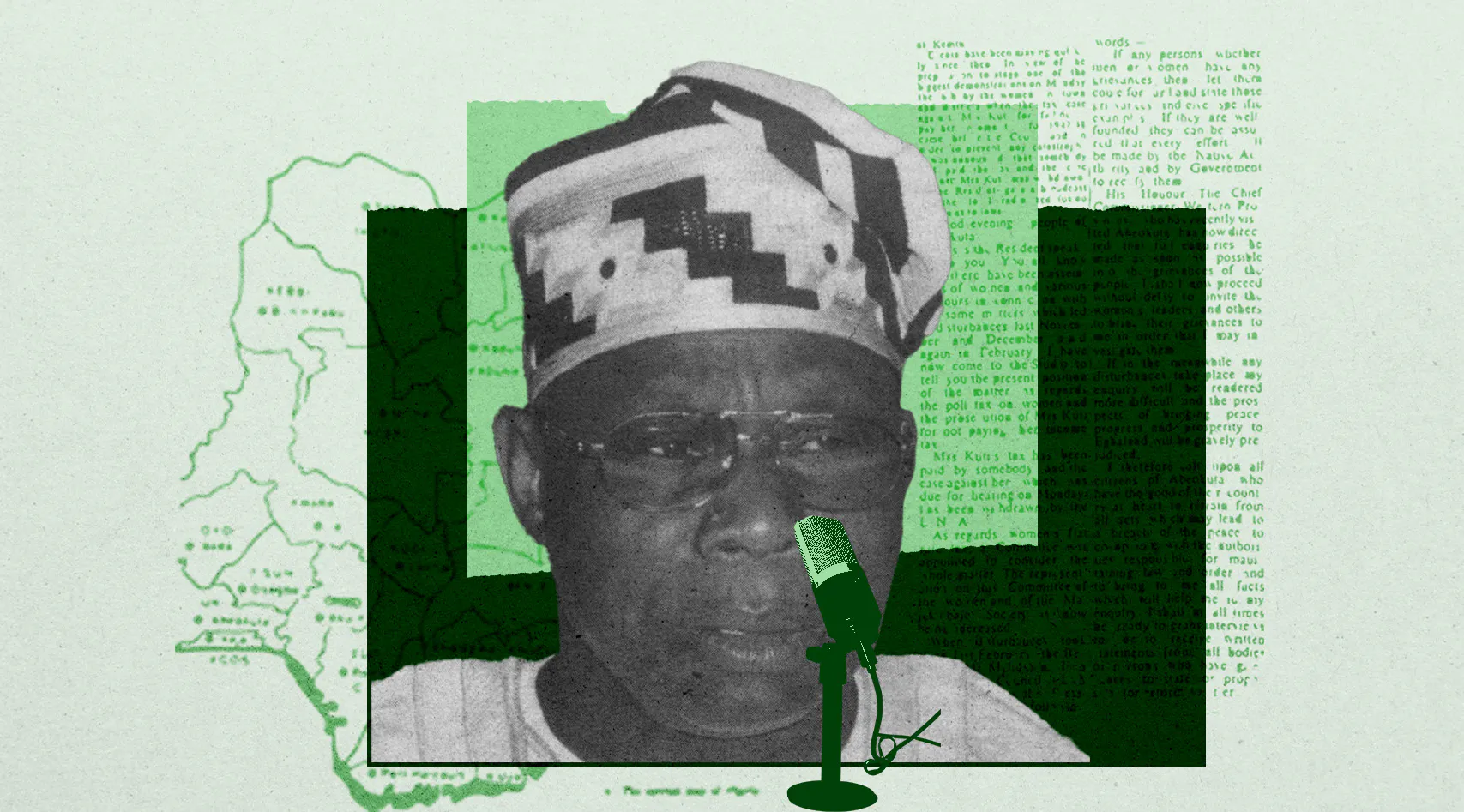
October 1, 2001 Independence Day Speech by Olusegun Obasanjo
Fellow Nigerians, in both my inaugural address on May 29, 1999, and my first anniversary broadcast on October 1, 1999, I spoke of a cautious optimism to which I felt, we, as a country, were entitled, after so many years of darkness. I spoke of the new opportunities we had to re-establish our tradition of civil and human rights, of a chance to heal old wounds of discrimination and impoverishment, to rebuild our collapsed infrastructure and reinvigorate the national economy.
I saw a new opportunity to rebuild our battered self-confidence; present our proper face in the international community; reassure potential foreign investors that it is mutually profitable to do business with Nigeria; and gradually work out the implications of our new constitution in which there appeared a number of unsatisfactory kinks in the details.
Our optimism, as cautious as it was, did not prepare us at all for the dismal reality we met on the ground. I had naturally assumed that after so many years of bad and tyrannical government, the task of reviving our institutions and restoring pristine values and reviving our infrastructure would be an enormous one. But what we actually found, and continue to discover virtually every day, was more shocking than we could ever have imagined.
Everything, it seemed, had nearly collapsed, the economy, our physical infrastructure, the system of our social organisation together with our values and morals. Cynicism and corruption were the order of the day. Violent crime had reached unprecedented levels. And nothing seemed to work: neither our factories, nor our schools and universities and hospitals, nor our roads, nor our electric power plants, nor our farms. In effect, we found that there was hardly anything to build on as we had optimistically anticipated. We were thus compelled to conclude that the only way forward would be to start the process of reconstructing a modern national community virtually from scratch!
We quickly embarked on a painstaking, time-consuming, but absolutely necessary process of systematic inquiry into the true extent of the devastation around us, while at the same time designing and introducing policies that were intended to correct the anomalies that our inquiry discovered.
We set up numerous panels to look into the operations and conduct of such major parastatals as NEPA, NITEL, NIPOST, Nigeria Airways, National Maritime Authority, Nigerian Railways, NAFCON, NIGERDOCK, the Ajaokuta Steel Complex, ALSCON, and many others, with a view to identifying what has gone wrong, establish the depth of the decay, and restructuring them so that they could deliver better service to their owners, the Nigerian people.
Simultaneously, we have steadily formulated policies and made decisions that aimed to demonstrate what a determined and committed leadership can do, to bring about progress, to enhance the wellbeing of all Nigerians, to create an environment of peace and stability in which all Nigerians, both as individuals and corporate groups, can develop their potentials to the fullest, and make our shores more attractive to both domestic and foreign investment.
Within the last two years, for instance:
- we have reviewed upwards the salaries and wages of all civil servants;
- we have reviewed upwards and ensured the prompt payment of pensions of most of our senior citizens;
- we have, with the legislative support of the National Assembly, addressed the issue of obvious neglect, impoverishment and degradation of the Niger Delta area, by setting up the Niger Delta Development Commission;
- we have tackled head-on the problem of corruption through the establishment of the Corrupt Practices and Other Related Offences Commission; and
- we have tamed the scourge of human rights violations, through the Human Rights Violations Investigations Commission.
We have developed and established a National Poverty Eradication Programme, specifically to squarely address the problem of poverty in our midst. And to resolve the ambiguities and inconsistencies in the 1999 Constitution, we set up a Constitution Review Committee ,which has since submitted its recommendations. The uses and abuses of federal landed property across the country have been investigated, and those properties that were illegally or improperly acquired have been largely recovered.
In agriculture, education, telecommunications, healthcare delivery; in the construction of new, and rehabilitation of existing roads across the federation; in the formulation of a sound economic policy that aims at fostering increased industrial development and curbing rampaging inflation, we have strived and worked very hard to meet the average Nigerian’s expectations that followed the transition to sane and democratic governance two years ago.
We note, for instance, that by 1999 when we took office, international support for our agricultural programmes was non-existent. The World Bank and other international actors had withdrawn from that sector. Today, however, we have regained our credibility to the extent that the World Bank is ready to come and invest in our agricultural sector and the Food and Agricultural Organisation (FAO) is actively involved in the formulation of a programme on food security for Nigeria.
In the educational sector, virtually all public institutions of learning from the primary to the tertiary levels were either closed or at a standstill, when we came to office. Our educational system was a shadow of its former self. Now we are pleased to report that, after protracted negotiations, the teachers are back in the classrooms, and learning is taking place in earnest. We will prosecute the Universal Basic Education (UBE) programme with vigour.
The successful takeoff of the GSM has launched our telecommunications system into the digital age. The transparency and accountability that characterised the process of selecting the winners of the GSM bid has earned our nation great respect in the international community. With the planned expansion of their network to every part of the country, Nigerians may look forward to efficient and less expensive telephone services.
Our scorecard may be lengthy, but even so, it would be very misleading to suppose that managing the political, social and economic affairs of our dear country in the last twenty-eight months has been easy. It has not.
As I look back on the last two years of our administration, I am convinced that there is much for which we should all be justly grateful. We have indeed made some progress, in healing the wounds of alienation and marginalisation of many of our citizens, in restoring hope to many who had been in despair, in beginning the process of steady progress through revitalising our economy.
But what still remains to be done is great and enormous, far eclipsing the modest achievements we have recorded so far. Despite our determined efforts in the area of poverty eradication, far too many of our citizens still remain poor. Our industries are being revived, and government has taken many measures to support them, but industrial capacity is still far below the levels we would like to see. Inflation is still with us, though today, it is not as alarming as it used to be.
The initial learning process for the executive and legislative branches both at the federal and state levels has now given way to a more cooperative and mutually reinforcing approach to governance. And in order to further encourage this process, it is my intention to submit to the National Assembly in the next few months a bill for an act that would seek to strengthen the fiscal and monetary management at the national level. For it is my view that while all levels of government, local, state and federal, have a joint responsibility for managing the national economy, the Federal Government must play a pivotal role in this regard, for the benefit of all Nigerians, no matter where they reside.
Social stability
The problem of conflicts in some part of the country is still a worrisome one. In the last 18 months we have had near spontaneous eruption of longstanding disputes within communities into violent, callous and senseless destruction of life and property. At the same time, we have had eruption of violent conflict in one part of the country reverberating elsewhere as cause for retaliation or revenge on innocent individuals or groups whose only connection with earlier eruption is in belonging to the same ethnic or religious group. Yet, over the same period, we have recorded significant success in dealing with conflicts and restiveness in the Niger Delta.
Fellow Nigerians, the constitution that binds us together as a society grants each and every one of us the right and the freedom to live and enjoy full citizenship status anywhere within this country. This is a fundamental right that we all have enjoyed at one time or another as we move up and down the country. We all have the duty to respect this fundamental right of every other Nigerian, and I am confident that we can do this without prejudice to our ancestral claims, no matter how long the history. We owe it to ourselves and to the future of this great nation that we are engaged in building, not to think of or see any fellow Nigerian as ‘a settler’ — in our country where he or she is a citizen by birth — so that we can feel justified to demand that he or she departs our neighbourhood, if and when it suits our whims. We cannot realistically build a nation on such shifty, whimsical and disunited notions and social attitude!
As a nation, we know and must appreciate coexisting with others as necessarily entailing and sure to generate friction in one way or the other. Development, democracy and maturity lie in not allowing the friction due to our coexistence to degenerate into violence, but in keeping faith with mutual respect upon which we can establish mechanisms at all levels for managing our differences and ironing out frictions.
To enhance security generally and to steer the tide of sporadic violent eruptions of incipient and dormant disputes, we will establish, as a follow-up on the Retreat on Security, a Commission on Security, to advise the government on ways and means of strengthening overall security for our people and enhancement of protection and safety of life and property. Peace and security are fundamental foundation stones on which democracy and development can — and need to — be anchored. There is no better option for consolidating political stability with social cohesion and harmony.
At the policy level, our administration has pursued the policy of privatisation and commercialisation with vigour, out of my conviction that the primary responsibility of government is to provide for our people, and for interested local and foreign investors, the necessary environment of adequate infrastructure and social stability, within which individuals and corporate groups can do what they are better able to do than government ever can.
Power supply
Two years ago, I made a solemn promise to the Nigerian people that I would exert myself to the utmost to ensure constant electricity delivery to all Nigerians by December of this year. A great deal of work has already been done to achieve this objective. In under two years, we have raised our generation capacity from about 1,400 megawatts to about 3,000 megawatts. We have also encouraged private sector participation in the generation of power. To this effect, the recent signing of an agreement for the generation of power between NEPA and AGIP Plc is indeed an encouraging development. According to reports, NEPA has considerably shed its dim image even three months before the promised date. I would add that the future is brighter.
The energy sector
For the first time in nearly a decade, all the nation's refineries are operating at almost optimal capacity. Oil companies have stabilised their operations because we have honoured our obligations to them. We are also taking deliberate steps to rationalise and liberalise the downstream operations of the petroleum industry so as to bring the highest possible benefits to the Nigerian consumer.
Still on the energy sector, we have pursued policies aimed at enhancing the revenue we earn from gas. At our inauguration two years ago, the Nigerian Liquified Gas (NLG) had plans for five trains. Today, the sixth train is on the drawing board. Memorandum of Understanding has been signed for two more NLG plants. Our objective is to earn as much from natural gas as we do from crude oil in the first decade of the 21st century.
I acknowledge that the response of the economy, especially the manufacturing sector, to our determined efforts at revitalisation has been slower than expected. This is understandable given the fact that we are now working to bring back life to the major infrastructure that sustain industrial production. By the time NEPA is fully rehabilitated, the communications sector is fully functional, the roads fully reconstructed and security of lives and property guaranteed by the state, and 100 per cent inspection is substituted by destination inspection to discourage unnecessary importation that may harm our industries, industrial growth will be phenomenal. It is pertinent to mention at this point that there is today increasing investor confidence in our country. This, no doubt, is an indication of the international community's appreciation of our commitment to the pursuit of sound economic policies. In two years, we have raised our foreign reserves from US$3.7 billion to over US$10 billion.
As we rehabilitate, privatise and commercialise, delivery of services from utilities will be drastically improved and will become more efficient. Revenue collection will also be overhauled so that those who enjoy services will have to pay for them. We will make it more difficult for people to cheat on the services they enjoy.
National security
The security situation in the country has been a source of serious concern to me. When we took office two years ago, the country was literally in a state of siege from armed robbers within the country and armed bandits who raided our country from neighbouring countries. In our determination to guarantee the safety of life and property throughout the nation, I have held a series of meetings with the various security agencies in the country culminating in the retreat on national security last August. What became obvious from the deliberations from the retreat was that the Nigeria Police, having suffered its share of the degradation in our social system, was ill-equipped, materially and morally, to perform its constitutional role of maintaining law and order and ensuring safety of life and property.
Notwithstanding cases of some bad eggs in the Nigeria Police, I believe that by and large, the Nigeria Police has some of the most committed and patriotic Nigerians you can find anywhere. I want to assure Nigerians of our commitment to building a formidable, well- equipped, well-trained, well-disciplined re-oriented and people-friendly police. Indeed, we have started with the lifting of the embargo on employment, ordering of equipment, provision of housing and barracks, ensuring prompt payment of salaries and insuring the lives of police officers who die on duty.
Our administration recently approved monetary assistance to the dependents of police officers who die on duty, ranging from half a million to four million naira. Indeed, arrangements are being made to pay the families of the police officers who died in the recent clashes. We will continue to adequately fund and equip the police so that it can provide efficient law enforcement and crime control. We will also continue to intensify the patrol of our borders while providing social amenities to the border communities. We have improved cooperation with almost all our neighbours in dealing with cross-border crimes and criminals.
In recognition of the fact that criminal acts perpetrated within our borders are committed with illegally acquired arms, we will wage an unrelenting war against illegal arms trafficking, trading and unlawful possession. To this end, we plan to put a bill before the National Assembly for a law that will deal with illegal arms in the country.
Foreign relations
Fellow Nigerians, in a shrinking global community where no nation can go it alone, Nigeria had in the recent past found itself isolated from the international community. We had been suspended from the Commonwealth, Nigeria's human rights record was subject of condemnation at successive meetings of the United Nations Human Rights Commission, the European Union and many important nations of the world had imposed one form of sanctions or the other on us, the World Bank had virtually withdrawn its support for many of our developmental programmes, and even our leaders were not welcome to some capitals of the world. Nigerian citizens were subjected to some of the most degrading treatments in foreign lands. That was how bad we fared in the international arena. And that was what our government met.
In a world that is increasingly interdependent, we had reasoned early after our election that we have to get Nigeria back to its rightful place in the international community. Gradually, but steadily, we started changing international perception about Nigeria. In two years, we have fully re-established our position in world politics. We have regained our seat in the Commonwealth, our leaders are welcome to any city that has something to offer Nigeria, we have been hosted by and have equally hosted some of the world's greatest leaders. Also, we successfully hosted a number of key international events, like the summits on Rollback Malaria and HIV/AIDS, and the Peace Meeting on Zimbabwe. And we are now playing leading roles in a number of international programmes and agenda, such as South Summit of the G77, and the New Africa Initiative. Relative to our position and image two years ago, we have made considerable progress.
The road ahead
But in spite of all this, I remain totally convinced that we have no reason as yet to be complacent. Political, social and economic progress and development are not singular events. They are continuous processes pursued on a relentless basis. We all need to apply our collective will and resources so that every day, every year, we can look back and see how much more value we have added to our circumstances.
In this regard, I observe with profound sadness that in all the challenges and difficulties we have all had to face, for all the courage and the endurance of the ordinary citizens of our country, there is still evidence of persisting attitude of cynicism, selfishness, greed and narrow-mindedness, especially among the leadership class. However, here and there, we see encouraging examples of heroism, patriotism and dedication to the common good. But most of the time and, ironically, particularly among the more privileged elites, it is still business as usual.
Despite the determined efforts that we in this administration have consistently made, through civil service reforms, through the establishment of the Corrupt Practices and Other Related Offences Commission, through the general and upward review of the salaries of all public servants, corruption is still a problem to continuously deal with. There are far too many public servants who still insist on demanding, “What's in it for me?” in the course of their duties. These people notoriously 'monetise' their executive authorities and decisions. Apart from breaching the anti-corruption law — for which they will be punished when found out — these people ruin the efficiency of the system by hoarding executive information and decisions that ought to be distributed and delegated. But, most of all, these people abuse and thereby lose that public trust and confidence which any decent system requires to operate creditably and respectably.
And yet, it seems to me an indisputable fact that all the dividends of democracy we can dream of will, in the end, amount to nothing, unless we first work hard to transform our attitudes, unless we accept and show through our actions that the collective good is always superior to our individual desires, unless public servants see their offices as public trust, unless we believe and affirm our commitment to a common national destiny, and unless we all accept that each of us has a unique contribution to make in our struggle to install in Nigeria a free, just, and ethical community.
I say each of us because I am convinced that every man, woman and child who is a Nigerian does indeed have a significant role to play in our march towards economic and social transformation. But the greatest responsibility lies squarely on the shoulders of our leadership class at all levels and in all walks of life. Government, whether at the local, state or federal level, is not omnipotent, either in its resources or in its ability to exclusively attain the objectives that we all wish for. Leadership is a calling, an endowment. It is not found only in government circles. And it requires a clear sense of duty, a dedication to the common good, an acceptance that there is indeed a moral code which must guide the conduct of all those who are fortunate enough to be placed in a position of responsibility and trust, whether in the public or the private sector. We are never likely to achieve the goals we all are aspiring to, unless our leaders voluntarily adopt these principles of conduct in everything they do.
Fellow Nigerians, as I conclude this address on the occasion of the 41st anniversary of our independence as a nation, I believe there is a great deal that we all may justly be thankful to Almighty God for, not the least of which is that we have survived. I salute you all, the men and women and children of this potentially great republic. There is much indeed that we have achieved in our short history, But there is so much more left to be done. Given the scale of decay in our system, our efforts originally felt like drops in the ocean. But fellow Nigerians, it is heartening for us in government to learn from you by way of feedback that enough of those drops are beginning to make impact for you to report that things are indeed getting better.
On my part, and on the part of our administration, I solemnly rededicate myself to the commitment I made when I took office: never to relent, and never to leave undone anything that could enhance our chances of achieving that destiny which God has granted this nation, and never to shy away, no matter the odds. We will have a bountiful harvest if we are not weary of working hard and doing good always.
Long Live the Federal Republic of Nigeria!
May the Almighty God in His infinite mercy bless you all.
I thank you.
Source: The Punch