Editor's Note: Who Needs to Remember the Past?
In 1985, Muhammadu Buhari was kicked out of Nigeria’s highest seat the same way he came in: through a military coup he did not see coming.
He would go on to spend the next three years in detention as Ibrahim Babangida became Nigeria’s latest military dictator. It was only after his mother's death in December 1988 that Buhari walked free, returning to a hero's welcome in Daura.
Newswatch, reporting on his release in January 1989, described his 20 months in power as the harshest Nigeria had known.
In the beginning, it seemed as if God sent Muhammadu Buhari to rescue his children from irascible Philistines. (But) the Buhari-Idiagbon duo was the first set of Nigerians to practicalise the concept of fear as an instrument of state policy.
Newswatch (January 2, 1989)
Two decades later, Buhari returned as a democratic candidate and eventually won the presidency in 2015, promising to rescue Nigeria, again. And so, it is worth asking: if more Nigerians had remembered his history as vividly as Newswatch framed it 25 years earlier, would the result of that election have been different? Would the world we know today look the same?
That question sits at the heart of this special edition of The Archivist. Who needs to remember the past? The obvious answer is everyone, but not everyone remembers the same way, or with the same stakes. Some of us return to history to trace the patterns shaping our daily lives. Some need it as a warning of what can happen again. For everyone, memory is survival.
Become an ARCHIVI.NG member and get updates straight to your inbox
In partnership with Learn Politics, we are publishing the work of a cohort of students who devoted weeks to studying Nigerian history. Their final task was to tell a story from the past in their own words and with their own perspectives.
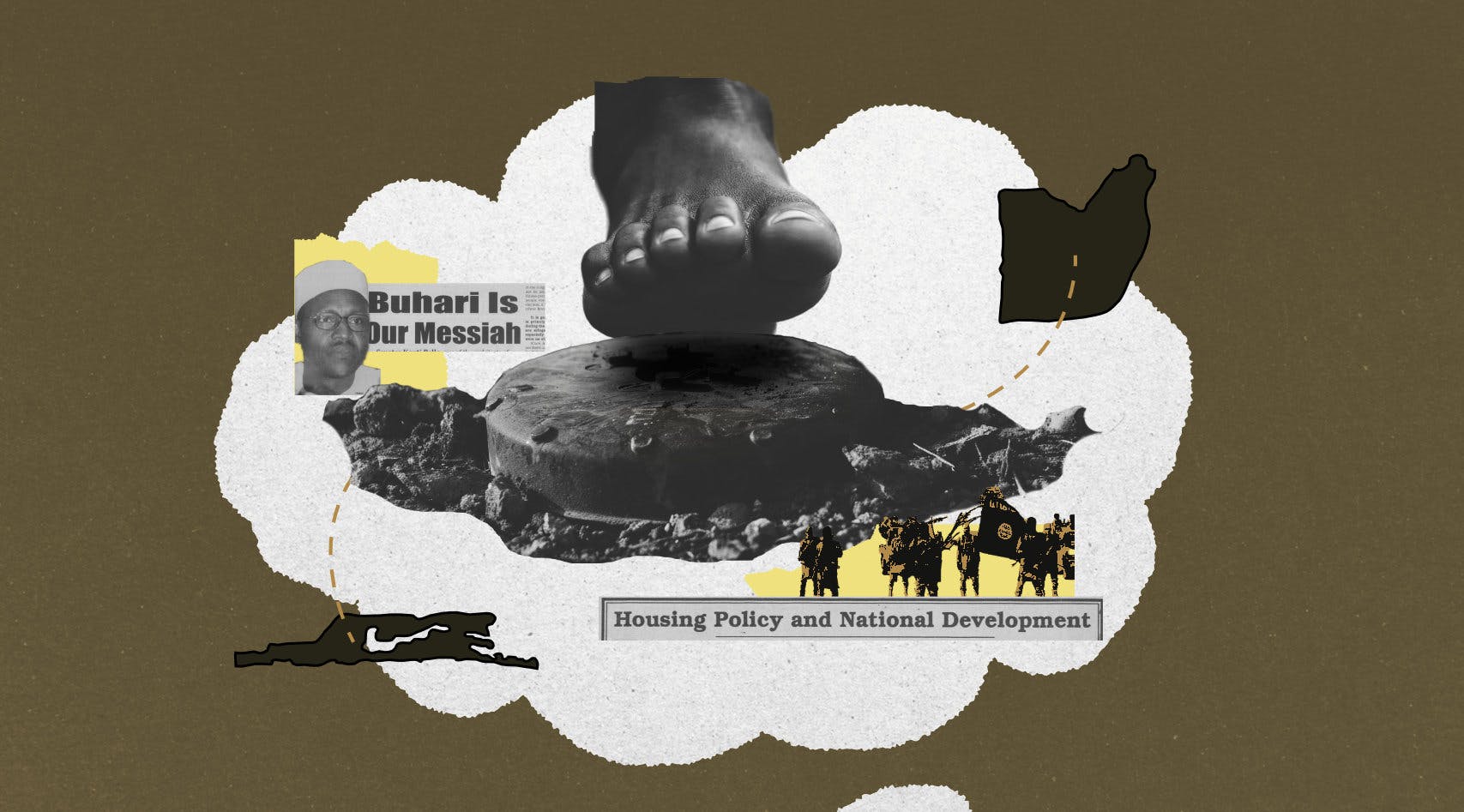
The three selected stories look at moments that shaped Nigeria in ways still felt today. One revisits the relocation of Nigeria's capital from Lagos to Abuja, a decision that shifted the nation's political centre of gravity. Another examines the generational trap of housing in Lagos, and how government intervention has long promised more than it delivered. The third looks back at a violent campaign of terror from the 1980s that tested Nigeria’s stability and foreshadowed the eventual rise of Boko Haram.
These stories show that the past never really stays in the past. What's remembered or forgotten will always shape the future.
This edition is to help you remember.
Credits
Editor: Ruth Zakari
Cover Design: Owolawi Kehinde