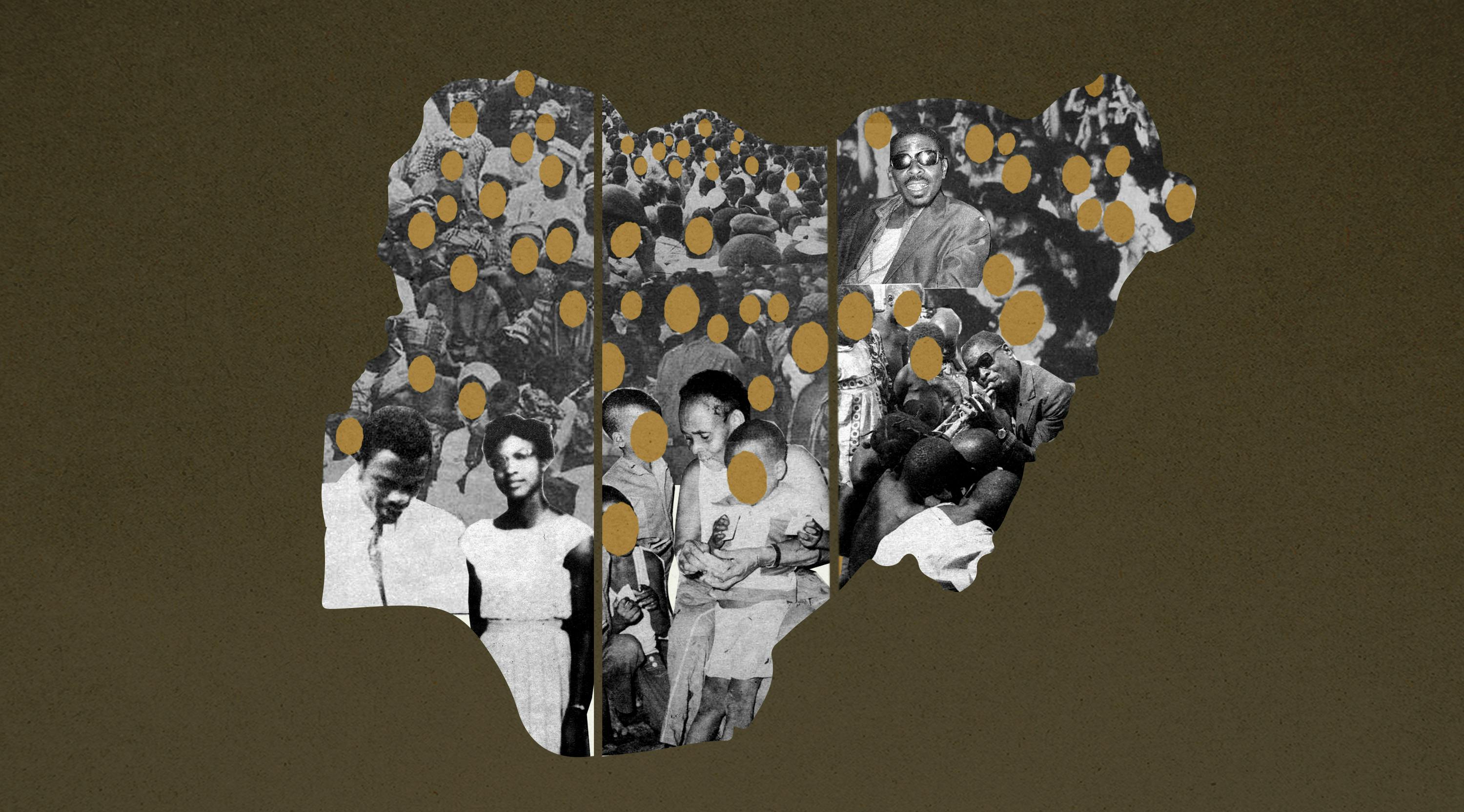
Editor’s Note: On the Margins of History
Rose Gbemudi’s life changed the day she met a girl with an unwanted pregnancy in Asaba. It was the early 1940s.
She convinced her not to go through with a planned abortion and offered to care for the baby for ₦4 a month. All the young mother needed to do was provide the baby’s clothes and medicines.
Rose, born in 1902, had four children of her own before her husband passed away. Keeping her family fed was a struggle, and she worked multiple petty jobs with limited success.
Fostering one kid opened a new pathway. Women who needed help brought their children to Rose’s doorstep. By 1945, she had made about ₦400 from caring for ten babies.
Rose moved to Lagos that year for more opportunities in the trade, though money was not her only motivation. She believed babies deserved to live, and that the culture of shame and social hostility towards unwanted pregnancies forced many young women to choose abortion.
Rose was burning to change that.
Become an ARCHIVI.NG member and get updates straight to your inbox
In Lagos, she first settled in Yaba, and later moved to Ajegunle when she noticed many clients came from there. She cared for an average of ten babies a month, charging between ₦10 and ₦12 for each one.
Her clientele ranged from unmarried mothers, working-class wives, market women, sex workers who couldn’t raise babies in brothels, and men who were widowed or divorced. Everyone called her the “mother of babies.”
The Nigerian Civil War between 1967 and 1970 disrupted Rose’s business. She could no longer guarantee the safety of the children. Ritual murders and child theft became rampant, worsening social tensions.
After the war, charity homes and foster mothers, who charged between ₦20 and ₦50 per month to care for one baby, sprang up. The competition forced Rose out of the business. She had to start working as a cleaner in her 70s.
Rose Gbemudi did not leave a legacy of wealth or fame. She did not build a house or own a car. But she did not consider those the measure of her life. The children she helped raise never forgot her. Over the years, some of them came around to help with domestic chores, and others gave her gifts.
A business born of economic hardship gave her a place in the lives of others.
Issue 6: Ordinary Nigerians
This year’s first issue of The Archivist features ordinary Nigerians like Rose who live on the margins of history. We’re examining Nigeria through the eyes of those who came before us. Their experiences expose systems and patterns that continue to repeat themselves across generations of Nigerian life.
Here are the places we’ll go:
The Ponzi King of 1989
A graduate of statistics convinces nearly half a million Nigerians to invest in a Ponzi scheme in the late 1980s and early 1990s. How he finds believers says a lot about the trend of similar schemes that fool people decades later.
Bill Friday’s Act
In Nigeria’s pre-independence and early post-independence years, the fandom of a musician rivals religious devotion. Yet his career has been largely forgotten. What does that loss tell us about the fragile nature of fame and the state of the Nigerian music industry today?
The Vanishing of Regina M.
In 1977, a divorced woman experiencing mental health challenges mysteriously disappears from her family home in the dead of night. The response of security forces and social institutions exposes how Nigeria treats its most vulnerable.
The Ones Who Stopped
Five people, in five different years, in five different places, meet a Nigerian policeman. They never make it home.
200 Nigerian Love Notes From 50 Years Ago
How have the emotional negotiations of Nigerian relationships evolved across multiple generations? We try to find patterns by digging into the love stories of Nigerian men and women as documented in the 1970s.
What you should expect
Each story in this issue will light up corners of Nigeria’s past we often overlook.
They show how the person who protested taxes in 1948, complained about the price of rice in 1971, or started a small business in 1994, contributes just as much to our collective history as the famous and infamous figures who fought for independence, staged coups and won elections.
I hope you recognise yourself in one or two of these stories, and consider how much of what feels routine today may one day become evidence of a larger pattern. Like Rose, history can be formed by people who probably never imagined their lives would matter beyond their own time.
This issue is for you.
Credits
Editor: Ruth Zakari
Cover Design: Adeoluwa Henshaw