March Recap: A Month Inside Nigerian Women’s Lives
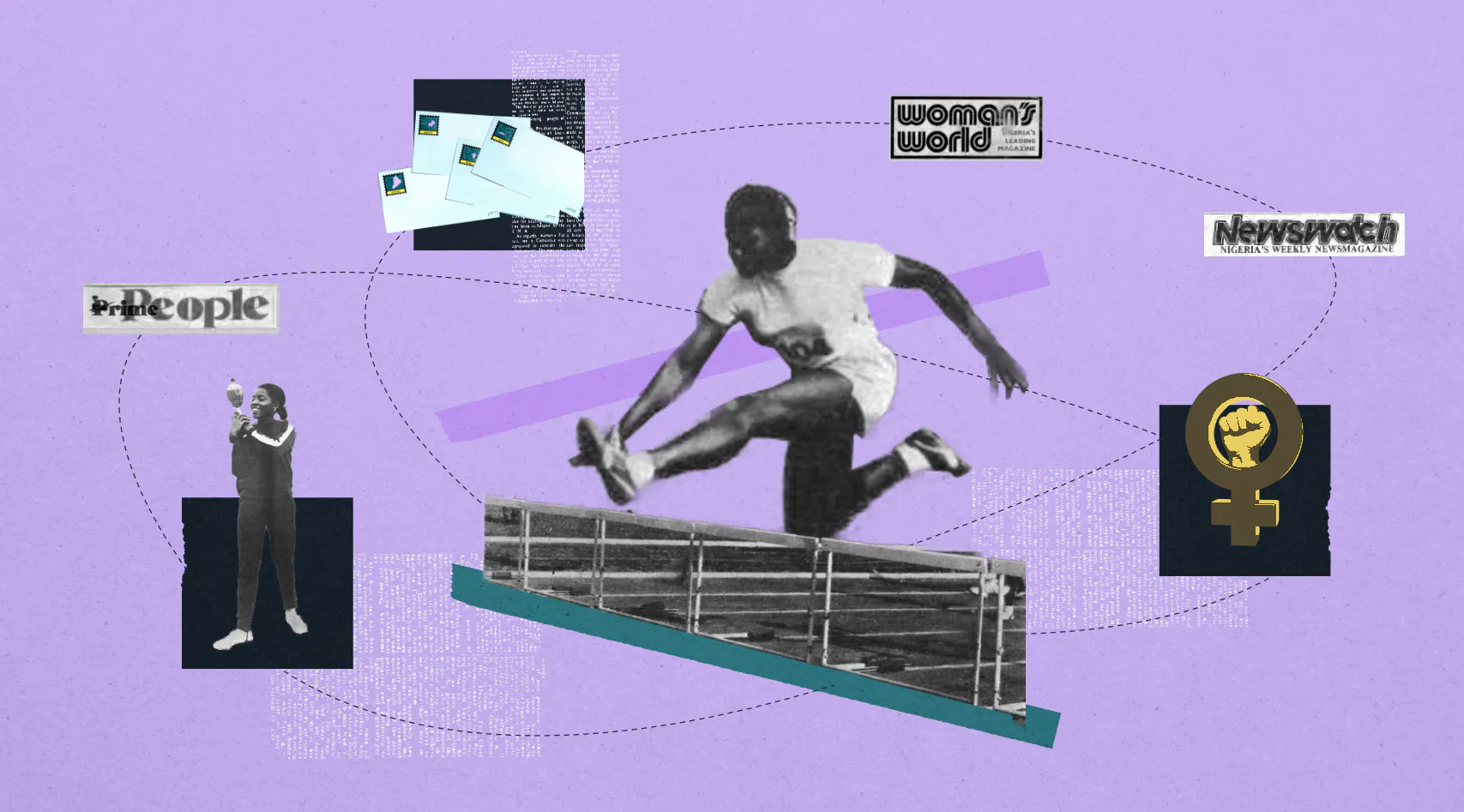
Only a year after she made Nigeria’s team to the Commonwealth Games as a 16-year-old athlete, Violet Odogwu faced a career-ending knee injury in 1959.
This would keep her from competing for four years, and she was close to giving up on a promising sports career when she met a specialist doctor in London who cured her troubled knee.
In 1966, she returned to the Commonwealth Games to claim bronze in the long jump, becoming the first African woman to win a medal at the competition. Two years later, she captained the Nigerian women's athletics team at the Olympics and reached the long jump final.
The stories of Nigerian women, like Violet, shaped our work in March—from women entering male-dominated industries, singing in small rooms and on big stages, dancing, winning elections, sacrificing and advocating for others.
Spending time with these records reinforced what we already knew. There is still so much to learn from the lives Nigerian women have already lived.
We need your support to sustain the work. Become a member.
What Happened in March 2026
69k followers across social platforms
- Our big feature story for this quarter’s issue of The Archivist was a special for International Women’s Day. We collated 99 letters that reflected the intimate lives of Nigerian women from the 1970s. They speak clearly about love, marriage, education, work, and the limits placed on them.
- Readers left with many lessons—from how clearly the women expressed themselves to how early they married, their priorities, the issues they faced that are still present or have changed fifty years later. If you haven’t, read the story here; you might learn something too.
- We also published the story of Bill Friday, a Nigerian jazz musician who found fame in the 1950s and 1960s, and later slipped out of view. His life reflects questions that still follow the music industry today. Who is remembered, who is forgotten, and why.
- Across our platforms, these stories and our daily clippings reached over two million views and drew more than 120,000 engagements.
- By the end of the month, we had crossed 30,000 followers on Twitter, 29,000 on Instagram, and 10,000 on TikTok. More people are finding their way into the archive.
Thousands of new pages are coming online
- This month, we digitised nearly 2,000 pages across publications including Citizen, Newswatch, Ovation, Prime People, Tell, The Nigerian Economist, and Woman’s World.
- But much of our operational efforts this month went into preparing close to 30,000 already digitised pages to go live on the website. Expect them any time soon, with more on the way.
New partners
- For our International Women’s Day feature, we worked with Aisha Ayan, who brought her own perspective to the letters through a reaction video. You can watch it here.
- We also partnered with Femme Africa to revisit the stories of early Nigerian policewomen, a debate about women’s liberation in the mid-1970s, and Elizabeth Ekong, Nigeria’s first female tennis star.
- We remain open to working with creators and organisations who want to explore Nigerian history in ways that feel thoughtful and alive.
Become an ARCHIVI.NG member and get updates straight to your inbox
What’s Next: April 2026
Next month, Mariam begins a new video series that looks at Nigeria through the eyes of a young Nigerian raised in a country very different from the better days older generations speak of.
In over six decades, the country has moved through the optimism of independence, war, economic shifts, military rule, and repeated attempts at democracy. At each stage, decisions were made that still shape everyday life.
This series follows those decisions. It asks what they meant then, and what they mean now. It is made for anyone trying to understand how history, politics, and culture come together to shape a country, and what that might mean for the future.
See you on April 27.
Credits
Cover Design: Adeoluwa Henshaw